Showing posts with label news. Show all posts

Sunday, August 7, 2016

Russian Media Poll on Northern Territories

The Russian state-owned media RT (Russia Today) recently ran an article (read here) about a poll taken of the Russian public showing an overwhelming majority of Russians oppose any deal to return the Northern Territories to Japan in exchange for a peace treaty with Japan. According to the survey, a majority of 56% said Russia retaining the Northern Territories was more important than a peace treaty with Japan, even if that were to include giving Russia access to Japanese technology and financial loans. For the question of giving up the entire Kuril Island chain, 78% of Russians opposed that, while a still overwhelming majority of 71% opposed giving up even the two southernmost islands, Habomai & Shikotan, while keeping the rest. Another compromise offered was to ask if the people would approve of a deal by which Russia acknowledged the Northern Territories as belonging to Japan but retained control of the islands for Russia and a still massive majority of 69% opposed even that nominal concession, which would actually change nothing. Less than half of the Russians polled, 48%, said that a peace treaty with Japan was important.

Soon, Prime Minister Abe and President Putin are scheduled to meet in Vladivostok as PM Abe has been desperately working throughout his time in office to come to an agreement with Russia, to return the Northern Territories to Japan and normalize Russo-Japanese relations. However, the simple fact that this study of public opinion was even undertaken at all shows that Russia has no intention to ever return the Northern Territories to Japan willingly. They have already invested a great deal in building up the military facilities on the islands with air and naval bases and can hardly afford to simple strip all of that down and give the islands away. The actions of the Russian government and the views of the majority of the Russian people have been pretty clear that while they would be pleased to have a treaty normalizing relations with Japan, they are not prepared to forfeit any territory they control in order to obtain that. It is quite a different attitude from that taken towards their new partners in the People's Republic of China. In that case, Russia did cede territory to China in order to obtain the current relationship between the two countries.

There is, however, one other view which, while not related in the article, can be seen numerous times in the 'comment' section which is that the impediment to an agreement over the islands is the current alliance between the United States and Japan. Numerous comments make the claim that Japan is not really an independent country at all but simply a dependency of the United States and that if the islands were returned to Japan, they would soon be hosting American military bases. This, of course, is nothing new. The Russians made the same argument during the Meiji era at the time of the Russo-Japanese War, portraying Japan as being the instrument of the English-speaking powers as seen here:
It was taken for granted in the Russian Empire that the only reason the Japanese were able to win the war against them was because of British and American support. Attitudes have clearly not changed. However, one can give the Russians or, at least, the Russian-sympathizers reading the article above, the benefit of the doubt. Perhaps this is true. How does that affect the situation?

A re-alignment of the international situation is not beyond the realm of possibility considering what is being discussed in the current U.S. presidential election. Donald Trump is widely seen as being much more inclined toward Russia and President Putin than past American leaders. He has at the very least strongly implied that America should not be so concerned about Russia and stay out of the affairs between Russia and Russia's neighbors. Trump has also been less than enthusiastic about maintaining American military bases around the world in allied countries. If Trump were to win the election, it is not then beyond the realm of possibility that the United States might ultimately close its military bases in Japan and withdraw American forces from the country. After all, Japan has considerably more influence than The Philippines and when the Filipino government ordered American military forces to withdraw from their country, which included the largest U.S. naval base in the world outside American territory (at Subic Bay), the United States packed up its gear and went home. If that were to happen with Japan, and if the Russians are correct that the American alliance with Japan rather than the Russian alliance with China is the real impediment to improved relations, that could be ended and we would be able to see the truth of the matter clearly.

Saturday, July 23, 2016

If Japan Is Fascist, Then So Are You
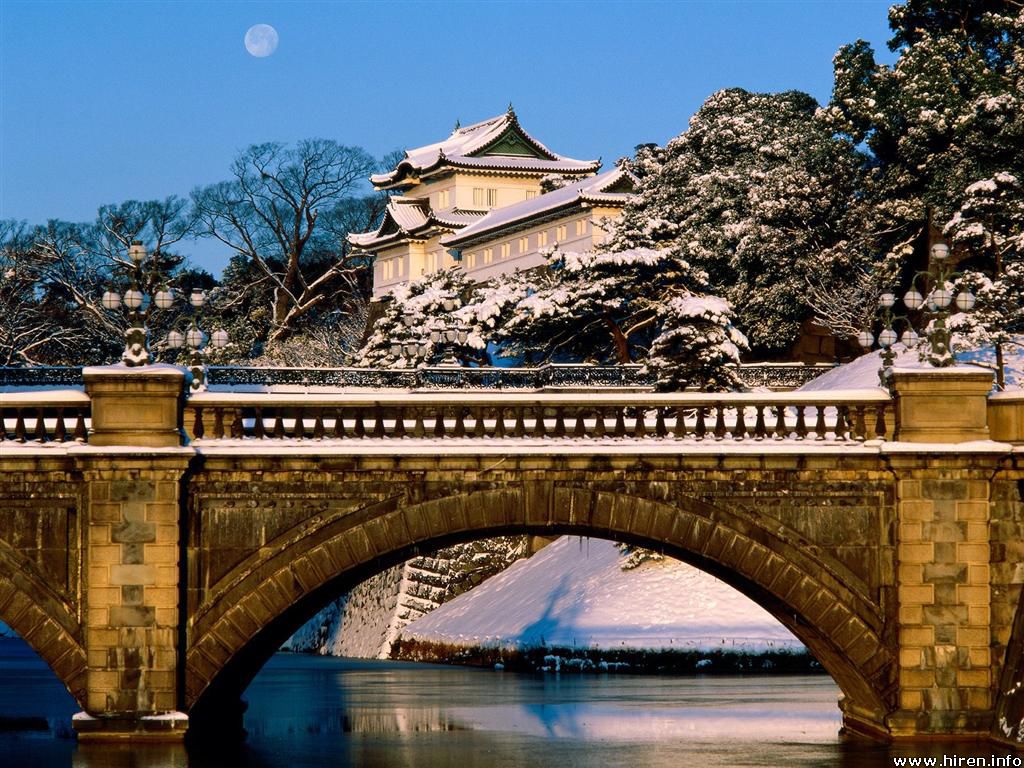
Last week, the conservative periodical “National Review” took time out from calling Donald Trump a fascist to take a swing at America’s most important ally in East Asia with an article by Josh Gelernter called, “Japan Reverts to Fascism”. The author wrote with great alarm that Shinzo Abe’s Liberal Democratic Party and the coalition it leads recently won a large enough majority in both houses of the legislature to amend the Japanese constitution, the constitution which Japan has had since the end of World War II and which has never been amended to date. He describes all of the ways that, in his mind, Japan is reverting to a fascist state which seems an odd thing for a conservative American magazine to say about a conservative government that is America’s staunchest ally in the region and easily one of our most important allies in the world. Calling someone a “fascist” is usually the trademark of the left. In fact, today, about the only definition of a fascist is anyone who the left doesn’t like. It is a bizarre and inflammatory accusation to make just at the outset. But, he made it and so must back it up. What evidence does Mr. Gelernter present to justify such an accusation?

He begins by pointing out that Prime Minister Abe and many of his compatriots belong to a nationalist group called Nippon Kaigi which portrays the Japanese as the ‘good guys’ in World War II who were simply trying to liberate East Asia from the clutches of the wicked white race only to become the victims of the overpowering force of the Allies. This is, admittedly, his strongest point as a failure to understand and recognize the mistakes of the past leaves a country vulnerable to repeating them and World War II was certainly a mistake for Japan. The Empire of Japan was destroyed by it, so obviously that wasn’t good for Japan or anyone else. However, as troubled as people in the west have every right to be about being vilified, the effort to refute the vilification of Japan is not something that should be considered troubling or at all unusual. Western countries have done immense damage to themselves by indulging in a masochistic guilt-complex and Japan would be wise to avoid a similar mistake. Also, the fact that the Japanese would have a different point of view, whether you think it right or wrong, about World War II should not be considered that outrageous.

For the sake of a largely American audience, allow me to point to some examples that will best illustrate why this is a double-standard. Most Canadians have a very different view of the War of 1812 than most Americans. Most Mexicans think they were the ‘good guys’ in the War for Texas Independence and the Mexican-American War. Although it is not the case today, for much of American history, most British people had a very different view of the American War for Independence than most people in the United States. Does this bother anyone today? Again, until relatively recently, most Americans in the south still thought they were the ‘good guys’ and the United States were the ‘bad guys’ in the Civil War. It is actually normal for countries to have different points of view about conflicts depending on which side you were on. Now, Japan has not been entirely consistent on this point, particularly concerning the other Axis powers Japan willingly joined before the war started but it is perfectly natural for any country to give their own side the benefit of the doubt compared to others. I could also point out that China and Russia also both have different opinions about World War II compared to the western Allies but no one seems to mind that very much.

However, while that first exhibit on the part of Mr. Gelernter may have some, small, bit of merit to it as something America and other western countries should be concerned about, his case goes from that rather shaky bit of ground to fall headlong into a bottomless pit of ridiculousness. He says that the people in power in Japan are still mad about the Japanese Emperor being forced to renounce his divine status, which is something that is debatable but which, in any event, is something that anyone in Japan should have every right to be upset about. He mentioned fairly early in the piece, which I reserved bringing up until now, that part of the proposed amendments to the constitution that the Japanese government is seeking were described by the LDP with the words, “several of the current constitutional provisions are based on the Western European theory of natural human rights; such provisions therefore [need] to be changed.” Mr. Gelernter takes great exception to there being anything objectionable about “Western European theory of natural human rights”. However, isn’t one of those human rights the freedom of religion? Shouldn’t the Japanese be free to practice the form of Shinto, their own native faith, however they choose? Don’t they have the freedom to believe in the divinity of their Emperor just as other people believe in the divinity of Jesus? Isn’t this one of the main points of the version of human rights he’s defending?

This is why I say that, by the logic of Josh Gelernter, if the Japanese are fascists, then so are you, so am I, so is almost everyone reading these lines. Does wishing to worship according to your own beliefs make you a fascist? He goes on from there to point to such things as people flying the Japanese naval ensign, aka “the Rising Sun” flag which was formerly the flag of the Imperial Japanese Navy, is currently the flag of the Japanese Maritime Self-Defense Force and so has been in use long before World War II and is still in use today. Does flying a flag of your country make you a fascist? Probably the most absurd thing he points to as evidence, however, is the Japanese national anthem. He seems to have an obsessive paranoia about this song, the lyrics of which are the oldest national anthem in the world so, again, something that was around long before World War II, long before fascism ever existed. It is a song wishing for a long reign for the Emperor which makes it about as “controversial” as the British national anthem, “God Save the Queen”. Does singing your own national anthem make you a fascist? If you think that is a silly question, why does this only seem to apply to Japan whereas in every other country, flying a historic flag or singing your national anthem is considered the most basic and inoffensive forms of patriotism and nothing sinister at all?

He also points to certain words and international rankings about the media to imply that freedom of the press is being restricted in Japan. He warns that the NHK, the state broadcasting network, is a mouthpiece for the government, implying that it spouts nothing but right-wing propaganda. Anyone can watch the NHK (it has an English-language channel) and see for themselves that this is ridiculous. If anything, the content on NHK is viewed by most Japanese on the political right as being skewed toward the left. This should not be considered surprising given that anyone with any honesty will say the same about the BBC in Britain, the CBC in Canada or the ABC in Australia. In the United States, given what is put out by the likes of CNN, MSNBC or FNC, I have a hard time taking such concerns about Japan seriously. The media itself is the biggest threat to a free press these days given how widespread, around the world, dishonesty and bias is. There is a reason why most Americans, in a country that prides itself on its free press, considers the media extremely dishonest and untrustworthy.

Finally, he also mentions the changes regarding the armed forces in Japan and the degree to which Japan has recently been strengthening the Self-Defense Forces. For an American conservative magazine to make an issue of this is appallingly ignorant. The United States has been urging Japan for decades to strengthen itself so as to be a stronger ally. A strong ally is a help whereas a weak ally is liability. That is a fact so basic that anyone should be able to grasp it. Japan is also in a very dangerous neighborhood. Russia still occupies Japanese territory, North Korea is constantly firing missiles in their direction and Communist China has been building up its military forces at an alarming rate while also making claims to Japanese territory. Any other country in the world with any sense at all would be doing everything they could to strengthen themselves in such a position. I will say again, if flying a flag, singing the national anthem and wanting a strong military is evidence of fascism, then almost every other country in the world would be considered fascist as well.

No, there is obviously a double-standard at work here and it just might have to do with those “Western European” theories about human rights Mr. Gelernter is so fond of. The nations of Western Europe and North America have, sadly, adopted a very liberal, internationalist mindset and guilt-complex that is destroying western civilization. An entire people seems bent on suicide and the people of Japan would only be showing great wisdom in wishing to take a different path. Are we holding up these same values at all anymore anyway? Freedom of religion is one Mr. Gelernter does not seem willing to extend to Japan and in the west it seems these days that some religions have more freedom than others. Freedom of speech also seems to be ever more restricted these days. Freedom of assembly doesn’t seem to be evenly applied anymore, it depends on what you are assembling for. Did anyone notice that the Bush family boycotted the recent Republican National Convention? I know, they oppose Donald Trump but it certainly paints an odd picture that a man like George W. Bush who would go to war to spread democracy would stay home and pout when the democratic process in his own party does not go the way he wanted it to.

The left, and now apparently the National Review, has become so fond of labeling anyone they disagree with a “fascist” that the term has effectively lost its sting. Taking a righteous pride in the symbols of your own country, like your flag or your anthem, to revere your monarch, to want strength and security for your nation and, yes, even to defend the honor of your forefathers should not be considered negative things and the fact that some would shows only that there is something very wrong with them, not with Japan. Of course, anyone can agree or disagree with certain points taken by the Japanese government, one can agree or disagree with their views on World War II but to make such accusations as this article does, for the reasons that it does, is simply disgusting and more alarming than anything coming from Tokyo. To love your country, to wish it to be strong and secure and to take your own side in an argument is natural and would previously have been accepted by everyone as simple common sense. If, however, that is the current measure of what it means to be a fascist, then, all I can say, is that the western democracies must owe a profound apology to the spirit of Mussolini.

Saturday, May 7, 2016

Japan and Donald Trump

One of the more interesting things about the surprising rise of Donald Trump to the rank of presumptive Republican nominee for President of the United States has been the reaction of foreign governments to his stated "America First" policy. Needless to say the most critical have been China and Mexico; the Chinese because Trump has accused them of ripping off the United States through currency manipulation and stealing American manufacturing jobs. He has openly threatened a 'trade war' with China. For Mexico it is the matter of Trump promising to build a wall along the U.S.-Mexico border and make the Mexicans pay for it through trade tariffs. However, they are not the only ones who have expressed outrage over the possibility of a Trump presidency. Western Europe has denounced Trump's immigration policies as well as his promise to make all members of the NATO alliance pay their fair share rather than depending on America to shoulder the majority of the burden for defending the continent. There have also been various reactions to Trump from East Asia after he stated that Japan and South Korea should not depend so heavily on the American military for security and that, perhaps, the U.S. forces will pull out and these countries should develop their own nuclear arsenals to deter threats from North Korea. About the only major foreign leader who has been positive about the rise of Donald Trump is Russian President Vladimir Putin.

Whether Trump will be the next President of the United States we cannot know but he has already done an important service to the country by shaking up major positions and mindsets that everyone had taken for granted and he has revealed things about the rest of the world to the American people as well as revealing to the rest of the world the fact that the American people see things very differently than they do. In regards to Japan specifically, the reactions to Mr. Trump have been very interesting. Some, like internet-celebrity Yoko Mada ("Random Yoko") have exuberantly cheered Donald Trump, whereas others, on the left and the right (as in America) have been extremely critical of his campaign and have expressed opposition to a potential Trump presidency. However, what I find most fascinating is the number of people who say the oppose Donald Trump but who reveal themselves to be in favor of most of his policies, at least as it regards Japan, they just support them for different reasons. At the end of the day though, they are on the same page!

On matters of trade, many have taken offense at Trump for saying that Japan has been "ripping off" the United States since the United States buys far more goods from Japan than Japan buys from America. He typically says this in a more complimentary way though, saying that Japanese leaders have been smarter than their American counterparts and so it is the incompetence of American officials rather than the Japanese that is to blame for any problems in this regard. Critics of Trump, however, often oppose the current trade agreements and the proposed TPP deal, just for different reasons. So, what is the problem? Likewise, on national security matters, many of the same people who criticize Trump for saying that Japan should develop its own nuclear weapons, have also objected to U.S. military bases being in Japan, have opposed nuclear warships using Japanese ports and have pointed to the alliance with the United States as the reason why Japan has so much trouble with neighbors such as China, Russia and North Korea.

This sentiment has actually been mirrored in the United States with people on the left opposing U.S. military support for Japan because they sympathize with China and believe that if America withdraws its protection from Japan, the government in Tokyo will have no choice but to give in to Chinese demands on historical disagreements and make friends with China. Likewise, they believe that if the U.S. would only withdraw its military forces from Japan, the Japanese government would have to renounce the claim to the Northern Territories and finally sign a permanent peace treaty with Russia. For the left, the U.S. military alliance with Japan is the only impediment to these conclusions as they blame it for "propping up" the right-wing groups in Japan. Similarly, the left in Japan has long been opposed to the U.S. military presence in places such as Okinawa and favored repairing relations with China while some on the right in Japan have likewise blamed their lack of a strong, traditional military and national pride on the (secret) opposition from their 'all-powerful overlords' in Washington DC. Either way, it seems both sides should be supporting Donald Trump!

At the end of the day, what everyone should remember is that Trump is a businessman and so he tends to view things dispassionately in terms of a cost/benefit analysis. The mistake many people have made is in thinking that the current state of affairs benefits the United States. Trump and his success have revealed that Americans do not and have not seen such benefit. Even on the Democrat side, the popularity of Bernie Sanders who also thinks current trade agreements are unfair and also opposes American military involvement overseas, also points to how widespread this sentiment is. So, for Japan, the situation is actually very simple. Is the U.S.-Japan alliance a cost or a benefit? Would it be better to remain friends with America or make friends with China? If a new alliance system is called for, would a country such as India be as willing and as able to defend Japan as the United States? It is up to Japan to decide, as it always has been. In the meantime, Trump may be helping Japan either way by prompting the Japanese people to take national security more seriously and increase military strength, either to be an equal partner with Trump's America or to face current threats alone or alongside countries with less military strength than the U.S.A. which would still compel Japan to become stronger or give in to the demands of her neighbors.

It will be fascinating to see how this all plays out. The status quo is being questioned in a way it never has before and that, at least, is a good thing in my view.

Tuesday, August 25, 2015

Russia Sends a Message to Japan

Despite the ongoing efforts of the Abe administration to improve relations between the governments in Moscow and Tokyo, Russia has sent a very clear and very unfriendly message to Japan concerning the Northern Territories. Despite repeated Japanese requests to the contrary, Russian Prime Minister and former President Dmitry Medvedev visited the disputed Japanese territory, occupied by Russia illegally in the last days of World War II. Because of this, a planned visit by the Japanese Foreign Minister, Fumio Kishida, to Russia will probably be delayed or canceled and a protest was given to the Russian ambassador in Tokyo. Prime Minister Abe expressed criticism of Russia’s action but, as usual, still said he holds out hope for talks with Russia and resolving the territorial dispute. This, of course, is not the first time this has happened even during the current phase of the dialogue between Japan and Russia (see past posts on the subject here and here) and the continuation of this cycle has, so far, been detrimental to Japan. Russia has conceded nothing and has continued to send officials to visit the islands against the wishes of Japan even though refraining from doing so would cost Russia nothing.

It should be perfectly clear to all by now that Russia has no intention of returning the occupied territory to Japan or even having a serious discussion about the issue. Not long ago Prime Minister Medvedev announced that Russia would be investing 70 billion rubles in the region (which amounts to about $1.4 billion) as part of what he claimed was an effort to improve living conditions for the Russians who have taken up residence on the islands since World War II. There are about 20,000 Russians now living on the island chain and so such a sum would amount to an astounding $70,000 per person in order to, as Medvedev claimed, “improve living conditions”. Obviously, such a large amount of money would not be spent on the territory by Russia if they had any intention of returning the islands to Japan. Russia has also built up naval facilities there and has reportedly moved two new Borei-class nuclear missile submarines to the Vilyuchinsk submarine base in Kamchatka, armed with multiple nuclear warhead ballistic missiles, to threaten the United States. The Russian military has said that their control over the entire Kurile island chain is vital to protecting these offensive weapons in the Okhotsk Sea.

This action also suggests that President Vladimir Putin may not have been at all sincere in his previous offer to return the less strategically significant islands of Shikotan and Habomai to Japan, an offer which the Japanese government rejected as it would mean endorsing the illegal occupation of the remainder of the islands which have always been considered an integral part of Japan. While this Russian military buildup has been going on, Russia has also been very critical of Prime Minister Abe’s efforts to allow for collective self-defense and increased national security for Japan. This is, of course, totally in concert with the wishes of China which does not want to see Japan strengthened and which continues to try to isolate Japan on the world stage. The way the Abe regime has persisted in pushing for dialogue in spite of repeated and very public insults by the Russian government has made Japan appear weak. However, the Russians themselves have been failing in their overall strategic plan for East Asia and are increasingly becoming subordinate to the Chinese.

Putin adviser Sergei Glazyev stated not very long ago, in a policy manifesto, that Russia must ally with the growing power of China but avoid becoming a Chinese vassal by also strengthening ties with other Asian powers such as India, Korea, Japan, Iran and Vietnam. However, the Chinese policy of expansion has thwarted any Russian effort to broaden its base of support in Asia beyond China. India has been alarmed by the presence of Chinese naval forces in the Indian Ocean, Vietnam has been confronted by China at sea and even though Vietnam is the most recent American enemy in the region, Chinese aggression has caused a softening in Vietnam toward the United States so that U.S. naval vessels are now stopping at Vietnamese ports. As Chinese aggression continues, Japan, The Philippines, Vietnam and others are all becoming more concerned about security and have looked to strengthen cooperation on defense matters with the U.S. and Australia. Russia is tied to China, everyone can see that, and it doesn’t help that this policy of greater defense cooperation is exactly why Prime Minister Abe is pushing to allow for collective self-defense by Japan, a move which Russia opposes and it is clear that this is in lock-step with the Chinese. All of this shows how Russia is becoming more and more beholden to China alone and recent events have shown that China is not quite the economic powerhouse everyone believed it was.

It should be clear that Japan will gain nothing by further dialogue with Russia over the Northern Territories. However, as China has returned to more classically communist policies under the current dictator, their economy has started a downturn. If Japan continues to strengthen itself and sticks to common sense policies, it can survive the coming storm while Russia may prove to be tied to disastrously inept government in China. Eventually, if things continue as they are, Japan will be in a much stronger position and Russia may be obliged to finally address the issue of the Northern Territories with sincerity and a more respectful attitude toward Japan.

Saturday, August 15, 2015

HM the Emperor Commemorates the End of World War II

70 years ago today HM the Showa Emperor announced the end of hostilities and acceptance of the Allied demands, bringing the Second World War to an end. Their Majesties the Emperor and Empress attended a special ceremony at the Nippon Bukodan hall in the Chiyoda Ward of Tokyo which was attended by 6,517 people. There was a moment of silence at noon in solemn commemoration of the people killed in the war and all those who lost loved ones in the massive conflict. More than three million Japanese people died because of the war. The number of survivors has been dwindling rapidly in recent years so that, this year, only 14 war widows were present for the ceremony.

His Majesty the Emperor said, "On this day to commemorate the war dead and pray for peace, my thoughts are with the people who lost their precious lives in the last war and their bereaved families," His Majesty also said, "Reflecting on our past and bearing in mind the feelings of deep remorse over the last war, I earnestly hope that the ravages of war will never be repeated," Heartfelt sentiments that everyone can agree on.

Some government officials marked the occasion by visiting Yasukuni Shrine where all those who lost their lives in the service of the Emperor are memorialized. Former Tokyo Governor Shintaro Ishihara visited the shrine and stated that he would like for HM the Emperor to do so as well. The current Emperor has never visited Yasukuni Shrine though other members of the Imperial Family have made offerings there on his behalf. Prime Minister Abe did not visit the shrine this year due to the habit of the Chinese and Korean governments of trying to make an international incident out of every such visit. However, another government official made offerings at the shrine on behalf of Mr. Abe and stated that the Prime Minister's feelings about Yasukuni Shrine and his gratitude toward the Japanese war dead have not changed.

Tuesday, May 26, 2015

Imperial Remembrance of Bombing Victims

Today, Their Majesties the Emperor and Empress placed flowers at the Tokyo Memorial Hall in honor of the victims of the Allied bombing in World War II. The occasion was the 70th anniversary of the "Great Tokyo Air Raid" and the hall contains the ashes of roughly 105,000 victims of the bombings. Hundreds of thousands of Japanese people, mostly civilians, were killed in the conventional bombing raids on Japanese cities, many more than were killed in the two atomic-bomb attacks actually. After the war, at the war crimes trials in Tokyo and Nuremberg, no Axis officials or military personnel were convicted of war crimes for bombing civilian targets. The reason for this, of course, was simple; the Allies had bombed civilians themselves and did not want their people to face charges, so the issue was not taken up.

Thursday, May 21, 2015

Japanese Film Backfires in America

Recently the young man filmmaker Yujiro Taniyama debuted a film dealing with the comfort women issue at Central Washington University. The result was a much larger demonstration of opposition to Japan. The Chinese communist goal of causing division between Japan and America was given a boost because of this film and a lack of understanding of American culture and politics. The film was called "Racist America: The Scottsboro Girls". If the intention of the filmmaker was to tell Americans the Japanese side of the comfort women story and convince them that there was no official policy for the systematic enslavement of women by the Imperial Japanese Army, it failed completely. If the desire was to help communist China by causing division between the people of America and Japan, weakening the alliance between the two countries, it was much more successful. After the incident, more people heard the anti-Japanese, Korean version of the comfort women story.

Why was this? Anyone who knows the facts will understand that it is ridiculous to claim that Japan was able to keep 200,000 women as sex slaves. The filmmaker presented numerous facts to support this. However, facts have no impact if no hears them. People have to first listen in order to hear those facts and people will not listen if they are first insulted. That is what this filmmaker did by calling Americans "racist" and invoking the name "Scottsboro Girls" which is a reference to the "Scottsboro Boys" which is a term for a group of Black men who were accused of raping two White women in America many decades ago. It is a painful and sensitive subject in the United States. The American writer, Michael Yon, who has made similar statements, reviewed the film and stated that it went too far even for him and warned that it would be counter-productive to the Japanese goal of refuting the "sex slave" version of the comfort women story. You can read his post on the subject (in English and Japanese) on his page here. With this film, it is not a case of there being any incorrect information in regards to the comfort women issue but rather the way it is presented and who is presenting it to the people in the United States. Again, if you start by insulting the American people, calling them "racist", they are not going to listen to what you have to say.

This is exactly what happened to this filmmaker. After his speech, only about 20 people remained to watch his movie, the rest left during his opening remarks. However, about 100 people attended a rebuttal discussion held at the university by Korean activists giving an anti-Japanese point of view. Why the difference? One easy difference is that the pro-Korean view meeting did not begin by insulting the audience they were trying to win over. Unfortunately, this filmmaker, Yujiro Taniyama, has a habit of making insulting remarks about Americans. As he recently tweeted prior to an appearance on the Islamic Al-Jazeera network:

Such remarks only help those who wish to portray Japan as a "false friend" of the United States and not a trusted ally, which is the Red Chinese goal. This will infuriate Americans on both the left and the right, Black Americans and White Americans the same.

Leftists and Black Americans will be outraged simply by the title, using the memory of the "Scottsboro Boys" for an issue not having anything to do with Black Americans. It is always a controversial issue whenever anyone tries to compare their situation with that of Blacks in the United States. On the other side, to the right, White Americans will be equally outraged at being called "racists" and blaming Americans for the comfort women issue. Similar to Japanese difficulties with Korea and China, White Americans are often confronted with accusations of racism based on issues of history long in the past. There are also many on both sides and both Black and White who will resent what appears to be a foreign young man stirring up racial antagonism in the United States over a past issue that causes both sides pain and anger. None of this helps Japan but rather it greatly helps the Chinese communists and Korean enemies of Japan who want to divide Japan and the United States, especially at a time before Japan has fully revised Article 9 and become as militarily strong as possible. This film has already caused damage and given Japan a negative image in the United States. Whether or not that was the intention, it has been the result. It is simply a question of taking sides; to be on the side of the Americans and Japanese who want a strong alliance or the side of the Red Chinese who want the alliance to end and isolate Japan on the world stage.

Wednesday, April 29, 2015

Mr. Abe Speaks to Congress

This morning Japanese Prime Minister Shinzo Abe addressed a special joint-session of the U.S. Congress, speaking on a number of topics with most of the emphasis on the alliance between the United States of America and Japan. His speech was very well received and hit all the right notes. The Prime Minister started out by stating that, while he had a lot to say, he would not be filibustering, showing that he was aware of how the Congress operates and that he has a sense of humor, which is a good way of starting out. Americans like it when national leaders make jokes, especially at the expense of politicians. He talked about his own experiences living and working in America, in both a humorous and heartfelt way, which also went over well. Everyone enjoys praise and validation. With the U.S. diplomatic corps present, he also did not fail to praise the succession of U.S. ambassadors to Japan. Some ambassadors deserved such praise but for others we can attribute this to polite civility. He also received a standing ovation for his remarks about the peace and reconciliation achieved by Japan and America since the Second World War. That was extremely significant and his words were very well chosen. Many people around the world were probably listening most closely to that part of his speech and I thought it especially praiseworthy.

Mr. Abe expressed his sympathy for the Americans who lost their lives in the battles fought against Japan, his visit to the World War II Memorial and offered his heartfelt condolences to all those who had suffered because of the war. This was probably the most perfect thing he could have said, showing his sorrow at what had happened in the past but not giving in to guilt or assigning blame. He also said he upheld the past remarks by his predecessors, referring to their apologies for Japanese actions in World War II, but did not repeat them. That too was entirely appropriate. His presence in the House chamber alone is proof that America has moved on and this constant obsession by some countries in trying to force Japan to go on apologizing forever is both childish and unproductive and Mr. Abe was correct not to be drawn into that. He also highlighted two special guests; an American veteran of the Battle of Iwo Jima and the grandson of the heroic Japanese commander of the Iwo Jima garrison General Kuribayashi Tadamichi. It was a very moving moment and showed mutual respect and admiration for both sides in a fierce battle. The sacrifices of both sides should be remembered with pride. I would add that, as Prime Minister Abe visited the World War II Memorial, it would be entirely appropriate for a future President to visit the Yasukuni Shrine in Tokyo but I would not hold my breath waiting for that to happen.

The Prime Minister also made "democracy" a theme of his speech, pointing out, in a subtle way, that democracy came to Japan at the time of the Meiji Restoration (it was not something invented after World War II), that Japan stands with the democratic countries of the world and that Japan and the United States share a commitment to democratic ideals. This was also a subtle reminder that not everyone in the world does, most likely a reference to China and North Korea. In his remarks, the Prime Minister was very adept at including phrases that would appeal to both Republicans and Democrats in the audience. His words about the need for vigilance, security and trade appealed to the right side of the chamber while his words about climate change and increased participation for women in the workforce appealed to the left side. This showed that he was well prepared. However, he was also not afraid to speak out on a subject, controversial in the United States, such as the Trans-Pacific Partnership. This is something which the President supports but which many in his own party oppose. Abe gave it his strong endorsement and made a good case for its passage.

Again, though, the U.S.-Japan alliance was the 'backbone' of his remarks. He spoke very well about how important the stability was that the alliance provided, allowing for the economic boom that East Asia has experienced in recent decades and he also laid out his very reasonable principles for dealing with disputes over territories in East and Southeast Asia. No one in the chamber could have taken exception to any of them. He also highlighted his plan for the strengthening of the Self-Defense Forces and the push by his government for Japan to take on greater responsibility in maintaining peace and security around the world. At the end of his remarks, he spoke of the Japan-U.S. alliance as an "alliance of hope", and stood as the hope for a better world.

Saturday, April 25, 2015

Mikasa Princesses Visit Yasukuni Shrine

Last Wednesday Their Imperial Highnesses Princess Akiko and Princess Yoko of Mikasa visited the historic Yasukuni Shrine on the occasion of the Spring Grand Ritual of the Shrine, paying their respects to the honored war dead of Japan from throughout the modern era. Despite what is often published in the media, Yasukuni Shrine is not about honoring "war criminals". It was built in the Meiji era to house the spirits of all those who have given their lives for the Emperor and the country of Japan. Many non-Japanese are enshrined at Yasukuni and it includes those who died in the Satsuma Rebellion, the Sino-Japanese War, the Russo-Japanese War, the First World War, the China Incident and the Pacific War. Nearly two and half million names, including men, women and children are enshrined there. It only became controversial in 1978 when the names of 14 men executed for war crimes were enshrined there, without prior consultation with the Emperor. This caused undue upset in some quarters and after that time HM the Showa Emperor stopped visiting the Shrine and the current Emperor has, likewise, never done so. It has become more controversial since then as foreign countries, particularly China and South Korea, issue public protests any time that anyone of any significance or notoriety visits the Shrine simply to pay their respects to those who paid the ultimate price in defending their country and way of life. For the princesses to visit should be seen as nothing more than an admirable act of piety.

Sunday, April 19, 2015

Battle of Wills in Okinawa

Prime Minister Shinzo Abe has now met with Okinawa governor Takeshi Onaga over his staunch opposition to the relocation of the U.S. Marine Corps Air Station Futenma. They seem to have had a good conversation but were not able to accomplish anything by it. Additionally, it seems difficult to see how an agreement can be reached as Onaga and his supporters oppose any relocation of Futenma base as well as the continued existence of the base at Futenma at all. He claims, of course, that he understands the importance of the Japan-U.S. alliance but I have my doubts about this. Certainly, the stand-off is presenting a bad public image leading up to the unprecedented visit of Prime Minister Abe to the United States to address a special joint-session of Congress. There is quite a bit that can be seen, 'reading between the lines' about this visit and the background stand-off over the Futenma air station.

Prime Minister Abe is the first Japanese leader to be invited to address the U.S. Congress and is a clear sign of American support for the Abe administration and his policy of strengthening the Self-Defense forces and reinvigorating Japanese leadership in East Asia. This military build-up has long been an idea that the U.S. government has favored (an admission of the mistake American officials made at the end of the war in the drawing-up of the current constitution). The special invitation of Prime Minister Abe to address Congress has also not gone unnoticed by the leaders of the bandit regime in China, nor are they ignorant as to the message this is sending on the part of the United States concerning the strengthening of Japan. Undercover investigations have shown that the Chinese Communist Party has been the major supporter of the opposition on Okinawa to the U.S. military presence. Not all of the people who join the protests are going along with this or are even aware of it but they are what the dictator Joseph Stalin called "useful idiots", which is to say, people who are helping a cause out of ignorance to its true purpose. It is clear that this is the case because the long-standing and obvious goal of Communist Chinese policy has been to isolate and so weaken Japan.

The Communist Party leadership knows as well as anyone that so long as the U.S.-Japan alliance exists, they cannot touch Japan. They also know that if the Japanese people demand or can be influenced to demand the removal of U.S. military bases, the Americans will pack up and leave. This is exactly what happened in The Philippines though, lately, the Filipino government has requested U.S. military forces to return due to the increased aggression and expansionism of China. However, there was a certain loss of solidarity there, because of the eviction of U.S. forces, that still lingers. The United States is the only official ally that Japan has and the CCP, more than anything else, wants this alliance to end. It is for the same reason that they have backed secessionist movements in the Ryukyu Islands, as far-fetched as they are, because if these were successful that would also be a means of getting rid of the U.S. military bases and a major block to their goal of economic and military domination of East Asia. No other power in the region is strong enough to oppose them so they are working on two fronts: militarily and economically; building up each so that no country will be strong enough to oppose them or that no country can afford to oppose them.
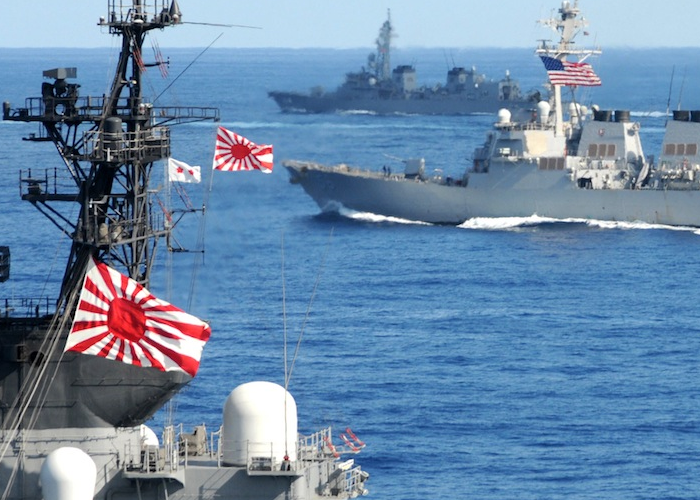
The dispute over military bases on Okinawa plays perfectly into the hands of the CCP, encouraging anti-American sentiments in Japan, which is shown in the United States in the form of the protesters and which then creates mistrust of Japan on the part of Americans. They can make use of local issues, local self-interest but it all serves their overriding goal of creating division which, if carried on, would, they hope, lead to the loss of a major strategic partner for the United States and the loss for Japan of their only official ally and the protection of the world's leading military. They are also, of course, always busy trying to buy influence and support with the politicians of both countries as well to further their goals. It is the classic "divide and conquer" strategy which people of goodwill on both sides of the Pacific must work to resist.

Tuesday, March 31, 2015

Sanctions Restored Against DPRK

Recently the Abe government announced it was restoring the sanctions Japan previously held against the communist dictatorship of North Korea. These had been lifted in July 2014 in a good-will gesture that was supposed to be reciprocated by North Korea investigating the kidnapping of Japanese citizens by North Korea over several decades. Not surprisingly, the investigation has gone nowhere and so, now, the sanctions regime is back in place.

Is anyone really surprised by this? This outcome was to be expected from the very beginning and the only thing that is surprising is that anyone in the Abe administration thought that there would be genuine cooperation from the North Koreans. Did anyone really think that the DPRK would sincerely investigate, admit their wrong-doing, return the kidnapped citizens and punish the perpetrators? Of course not. The DPRK got what it wanted as soon as the sanctions were lifted, so they had no reason at all to cooperate, all they wanted to do was to play for time, keep the process going, in-name-only, for as long as possible so that the sanctions would stay off for as long as possible.

This is similar to the policy of the Obama administration in America towards Iran; lifting the sanctions first and then expecting reciprocity from the Iranians regarding their program to develop nuclear weapons. Once you lift the sanctions, the other side has already won and has no motivation to genuinely cooperate. Closer to home for Japan, this is similar to the previous embarrassment with the sanctions against Russia. Japan did not go along with the sanctions regime in the hope that this good-will gesture would be returned by Russia in some way regarding the Northern Territories issue. Instead, Japan was publicly insulted and then had to play 'catch-up' in joining the other countries in the sanctions. The whole fiasco was very damaging to the image of Japan on the world stage.

To deal with a brutal regime like North Korea, the only policy is one of strength. Although there is plenty of friction in their relationship, the DPRK is too dependent on mainland China for there to ever be a crack in the "bamboo curtain" on that front. At present, there is not much Japan can do but a policy of strength and unity between Japan, the United States and South Korea would go a long way to helping the situation. But, of course, we know the problem there. Real unity does not exist between South Korea and Japan due to continued antagonism and there are factions in all countries that are blatantly or inadvertently helping the Chinese to "divide and conquer". If these forces can be resisted and if the policy of recovery and strengthening in Japan can continue, then Japan will be well placed when the inevitable implosion of mainland China happens to assume a new leadership role in East Asia.

Saturday, January 24, 2015

Prayers for Japan

News is just coming in that at least one of the hostages held by the ISIS Islamic terrorists has been executed. Right now, the reports are that they are offering a "prisoner" exchange for the other. Of course, the Japanese citizen being held is not a prisoner but a hostage, ISIS is not a legitimate country and Japan is not at war with ISIS. This is terrorism plain and simple. Japanese officials are said to be holding an emergency meeting at this time concerning the tragedy. Our thoughts and prayers go out to the family of the murdered individual and the one still being held. Japan is a close-knit country, viewed by many as one, large, extended family under the benevolent, patriarchal figure of the Emperor. So our prayers also go out to Japan as a whole on this tragic occasion. We can only hope that Japan and the rest of the world will come together to wipe out these Islamic terrorists once and for all so that such despicable crimes can be stopped.

God bless Japan and Long Live the Emperor!

Wednesday, January 21, 2015

Islamic State Attack on Japan

Just as Prime Minister Abe was visiting the Middle East, pledging to spend considerable sums in non-military aid to the region from Japan, terrorists of the Islamic State (ISIS or whatever one wishes to call it) were putting out a ransom video showing two Japanese hostages and threatening to behead them. This tragic situation teaches us a few things. For one, it is a lesson to Japan and many other countries around the world that Islamic terrorism is not just a problem for "some" countries to deal with but that it has an impact on everyone. Japan has never done anything to the detriment of any Muslim country, in fact, Japan has been one of the Middle East's best customers in purchasing oil. Even the aid given out by Prime Minister Abe was, of course, entirely of a non-military nature. Yet, Japanese civilians were targeted because these terrorists will target anyone they can get their hands on, whether they are American, European, African or Asian.

Secondly, this has shown how vulnerable Japan and Japanese citizens have been because of Article IX of the Constitution and how wise Abe was to initiate the reinterpretation of Article IX. It is something that cannot be done fast enough as this situation proves how imperative it is. After all, because of Article IX, Japan has very few options in dealing with this sort of attack on Japanese citizens. Japan cannot undertake any sort of rescue mission and, even if it could, how many JSDF personnel would have any experience in such operations? It also gives Japan very few options in finding other countries to give real support in an emergency. As it is now, the United States is the one and only official ally Japan has in the world, it is the only country that has given Japan a written promise that if anyone attacks Japan, America will be there to defend the country. Article IX is a major impediment to gaining more allies for the simple reason that it prevents Japan from reciprocating any military assistance. Why should any country pledge to help defend Japan if Japan cannot help defend them in return?

This crisis should be a "wake up call" to everyone in Japan who is still opposed to the reinterpretation of Article IX as it highlights just how dangerous the current interpretation is in a dangerous, globalized world where irrational enemies stand ready to attack anyone for any reason.

Monday, November 3, 2014

Day of Culture, 2014

Today is the Day of Culture in Japan and the occasion was marked by the bestowal of the Order of Culture (文化勲章) on seven individuals by HM the Emperor. These included recent recipients of the Nobel Prize. Six of those honored were able to attend the official ceremony at the Imperial Palace in Tokyo.


Thursday, October 30, 2014

Dutch Royal Visit to Japan

Their Majesties King Willem-Alexander and Queen Maxima of The Netherlands were welcomed on an official visit to Japan by Their Majesties the Emperor and Empress. The Dutch Royal Family and the Japanese Imperial Family have been known for their very close friendship over the years.


Sunday, October 5, 2014

結婚おめでとう。末永くお幸せに。


Princess Noriko Bids Farewell to His Majesty

Recently, HIH Princess Noriko formally bid farewell to HM the Emperor in preparation for her upcoming marriage which will entail her legally leaving the Japanese Imperial Family.