
Showing posts with label emperor. Show all posts
Showing posts with label emperor. Show all posts
Monday, August 8, 2016

Wednesday, April 8, 2015
The Meiji Emperor

Few other monarchs in world history presided over such a crucial period for their country as the Meiji Emperor of Japan. Few lived through such dramatic changes and fewer still managed to master such changes and successfully direct them to the benefit of their country as a whole. Emperor Meiji did all of these things. Born into a land of feudalism and isolation, very advanced in traditional ways but which had fallen increasingly behind the rest of the world in others, Emperor Meiji presided over the end of Japanese isolationism, the end of the shogunate and the restoration of power to the monarchy, a period of rapid political, economic, military and educational modernization and the rise of Japan to be the preeminent regional power of East Asia, soon to become a major player on the world stage. This pivotal period of Japanese history was certainly not something that the Meiji Emperor himself would have ever expected. In most cases, the changes that occurred, even the famous “Meiji Restoration” itself, was not something he personally directed but his influence and his actions or inaction was absolutely central to exactly how things turned out, creating the Empire of Japan as it existed from the restoration until the end of the Second World War.

His Imperial Highness, Prince Mutsuhito was born on November 3, 1852 in the old imperial city of Kyoto, the only surviving son of His Majesty Emperor Komei. His mother was the imperial consort Nakayama Yoshiko though it was many years until he was aware of who his real mother was. Known as Prince Sachi, he was carefully looked after by his grandmother until, as a young child, he was taken to the Imperial Palace (Gosho) to be raised and educated in traditional fashion. Only a year later the “Black Ships” of U.S. Commodore Matthew Perry arrived and demanded that Japan open ports to trade with the United States and establish diplomatic relations. The ruling Shogun realized that the previous policy of isolationism was no longer tenable but delayed making any agreement with the Americans. The Emperor was opposed to any trade or friendship with foreign powers but by consulting the imperial court increasingly, unlike in the past, the wheels were already turning toward what became the Meiji Restoration. The Americans pointed out that China had just been beaten by Great Britain in the Opium Wars and that if Japan persisted in spurning contact with foreign powers, France, Britain or Russia might deal similarly with Japan and seize control of Japanese territory. Most of the Japanese leadership realized this was true but were divided on how quickly Japan should open up to trade and communication with the outside world. Emperor Komei remained staunchly opposed but was himself in a difficult position in how to deal with the problem as he was against the policies the Shogun was pursuing but also wanting nothing to do with rebel forces that wanted to oppose the shogunate itself.
At a critical point, the Emperor ordered the expulsion of all foreigners (his many fervent prayers for the gods to kill them all by means of natural disasters proved fruitless) and as local authorities had signed agreements with various foreign powers, there were targets on hand for Japanese warriors to attack. There was, of course, retaliation but the government also took action to suppress these forces and reassure the rest of the world that Japan was a country of law and order which would keep its agreements. There was then civil war and deep divisions in Japan when Emperor Komei died in 1867 at the age of only 37. The cause of death was smallpox and while the vaccination against this disease was known in Japan, the strict adherence of the court to traditional medicine only meant that the Imperial Family was especially vulnerable to illness (Meiji, however, was secretly vaccinated as a child). So, it was at a time of great crisis, at the age of only fourteen, that Emperor Meiji ascended the throne as the 122nd Emperor of Japan. While he continued his studies and performed the traditional rites, warring factions continued to struggle for or against the last Japanese Shogun, Tokugawa Yoshinobu who had established closer ties to a number of foreign powers in an effort to modernize the military and strengthen the shogunate.

As with most things in Japan, the civil conflict was complicated but could be seen as a clash between the Shogun and the imperial court to determine who would ultimately rule Japan. In the end, the imperial court was victorious. This has sometimes been put forward as “traditional” Japan fighting against the forces of modernity and representing a xenophobic hatred of foreigners and all the new ideas and technologies they brought to Japan. This is completely untrue, Japan had always been eager to embrace technological innovation and it was the shogun who was first seen as the most open to the foreigners, not the imperial court and, in any event, both sides had their own foreign allies with the French backing the shogun and the British and Americans backing the forces of the Emperor. The restoration of power to the monarchy started with rebel lords upset by the opening up policy of the shogun, as was Iwakura Tomomi who played a central part in the process but this issue eventually evaporated and the imperial court pressed on because of a desire for order, unity and an overall strengthening of the nation, even though part of the disorder that alarmed them was that done on their own behalf. Major fighting broke out because the shogun agreed to hand over power to the Emperor only to later try to take it back. When it came down to who was ultimately held to hold supreme authority in Japan, there was no question that it was the Emperor and so the “Meiji Restoration” was formally declared on January 4, 1868. Iwakura stated that the actions of the court were completely in accordance with the wishes of the young monarch and there is no way to confirm or dispute this as the Emperor himself did not leave any indication of his own views on the subject.
What is known for certain is that the Emperor presided over the changes in government and was present for some very heated arguments between the pro- and anti-shogun factions and never intervened to call a halt in favor of the fallen shogun. It can only then be surmised that he approved of these changes and, based on his overall character, was likely of the view that such division and internal struggles were proof that a new system, a truly national one based on shared loyalty to one sovereign rather than local feudal lords, was what was best for Japan. The fears of those opposed to involvement with foreign powers may have been exaggerated but they were not unjustified. However, Japan would have to modernize and strengthen if it were to have any chance of surviving as an independent country and that is what Emperor Meiji was focused on. Soon, the Emperor announced the abolition of feudalism in Japan and oversaw the transition to a more democratic, representative form of government and, eventually, the adoption of a written constitution. At one point, he even took personal command of the imperial troops sweeping up the last of the pro-shogun rebel forces. By his actions, he set a clear example; Japan would adapt and move forward in order to improve but it would be done by the Japanese themselves and in their own way, embracing modern methods but retaining traditional values.

So it was that Japan began to advance at a rapid pace, establishing the institutions that would govern the Empire of Japan for its duration. The samurai of old became the officers of the Imperial Army, the daimyos became governors in imperial service and students went to study abroad to gain the latest knowledge. The British were an obvious example to follow and the Royal Navy in particular was the model on which the new Japanese Imperial Navy was built with Japan quickly gaining its first modern, armored warship, an ironclad originally built in Europe for the Confederate navy in America. The Emperor personified this embracing of new ways while holding on to tradition. In terms of government, he appointed key officials but did not personally rule the country and generally endorsed whatever course of action his ministers decided to pursue. He often showed reluctance to meet with foreign dignitaries but, when doing so, was always extremely polite and friendly, giving each the impression that he had been shown special treatment.
At the outset, there were some radicals who went so far as to wish for the monarchy to be abolished all together in the stampede to embrace the new and throw out the old and toward the end of his life several anarchists were arrested for plotting to assassinate him, however, his leadership, dedication and moral authority ensured that while Japan would advance technologically, traditional values were also upheld and the monarchy became more central to Japanese life and the emperor more revered than ever before. In terms of foreign relations, the Meiji Emperor was the greatest asset Japan had with many European and even American visitors hailing him as the greatest sovereign in the world of his time. However, the Emperor was sometimes disadvantaged by the fact that his ministers did not always keep him completely informed as to their plans and actions. This was particularly true in regards to the growing Japanese involvement in Korea where the Emperor had an incomplete view of the true state of affairs. First, however, was the problem of the First Sino-Japanese War which broke out in 1894.

This came after a series of events such as struggles between China and Japan over influence in Korea, Chinese soldiers running rampant in Nagasaki and the shutting off of food exports to Japan. The Emperor was always concerned with protecting Japanese people wherever they were but when events led to the outbreak of war he was extremely upset. When asked to send envoys to the tomb of Emperor Komei and the Ise Shrine to announce the outbreak of hostilities, the Emperor replied angrily, “Don’t send anybody. I have not been in favor of this war from the start. It was only because cabinet ministers informed me that war was inevitable that I permitted it. It is very painful for me to report what has happened to the Ise Shrine and the tomb of the previous emperor.” Later, he relented an sent envoys to Ise and Kyoto but it was obviously greatly troubling to him. He worried that other powers might intervene to the detriment of Japan, detested seeing his people killed and he had a great deal of respect for the traditional culture of China. However, once the decision had been made, he gave his full support and moved his headquarters to Hiroshima to stay in closer contact with the military forces engaged in Korea and China. As it turned out, to the surprise of all, Japan won a swift and stunning victory in the war, ostensibly for the independence of Korea.
In the aftermath, tensions continued to mount between Japan and Korea as well as between Japan and Russia. The intervention of Russia, France and Germany to force Japan to return the Liaotung Peninsula to China (which was then leased by Russia) reinforced the Emperor’s concern over foreign adventures. From the questions posed by the Emperor about the situation in Korea, it seems that he did not entirely believe the idyllic scene presented to him by his officials about Japanese-Korean friendship. When war came with Russia, the Emperor again showed signs of anxiety over the conflict but less reservations than he had about the war with China. It seemed clear to almost everyone in the government that Russia was not being sincere in the search for a diplomatic solution to their problems but was simply playing for time. Nonetheless, when war did come, the Emperor (and the Empress) showed great gallantry and insisted that greater care be taken to maintain discipline and prevent any acts of cruelty. Because of this, captured Russians were treated with great humanity and consideration. The Emperor also showed his gratitude for the support and sympathy of the United States and Great Britain in the conflict and the English-language press around the world was full of the highest praise for Emperor Meiji.

With no more competition, Japan and Korea signed a number of treaties, each bringing the two countries increasingly closer together. There was correspondence between the Korean and Japanese emperors and the Meiji Emperor showed a deep and genuine concern for his Korean counterpart. When the Crown Prince was brought to Japan to be educated, the Emperor treated him like a member of the family. Indeed, some thought he treated him better than his own son. Likewise, the Korean emperor showed a great deal of trust and admiration for the Emperor of Japan so that when Korea was finally annexed by Japan in 1910 the Meiji Emperor expressed his satisfaction with this resolution and the firm conviction that Korea would benefit from it. He had not been told of the extent of Korean opposition to Japanese rule and the Korean monarch was likewise hardly in a position to be completely candid in his letters but he expressed his hope and trust that under Emperor Meiji the peace of East Asia would be maintained and that everything would work out for the best. His actions, he stressed, were born out of a genuine desire to do what was in the best interests of his people. Tensions would continue to fester on the peninsula but in Japan, the ordinary person saw only success and reasons for optimism. Since the restoration, the Meiji era had seen Japan modernize and expand in strength and influence so that the Japanese flag was flying over Sakhalin, Korea and Taiwan.
What problems would develop were ones that the Meiji Emperor would not live to see. Troubled by increasing health problems, the revered monarch died on July 30, 1912 at the age of 59, survived by his wife, three of five concubines and five of his fifteen children. At his passing, he was praised by people all over the world, naturally mostly in those countries with whom Japan had the closest ties of friendship. The British press was effusive and even the American press, which did not often praise any monarch, professed that the Meiji Emperor was one of the greatest world leaders of all time. Even the French and the Chinese, which were not so well-disposed toward Japan, saluted his achievements. The Russian press was not left out in praising the Emperor, though they did affirm that he did not rise to the level of Peter the Great. None could fail to be impressed by how far Japan had come in such a short space of time under the leadership, active or passive, of Emperor Meiji. The country which had been a patchwork of warlord fiefdoms at the time of his birth had opened commerce with the world, industrialized, modernized and by the time of his death stood among the ranks of colonial empires and the most powerful country in East Asia. It was truly remarkable and in all of this the Emperor was no passive observer.

As a monarch, Emperor Meiji was, as if by divine design, just the sort of sovereign Japan needed at just that critical period of history. He was mindful of tradition but open to change and innovation when it was beneficial. He did not push particular policies but used his moral authority to guide them in the right direction. He was deeply concerned for his people, very frugal, was able to read people and knew how best to handle almost anyone in any situation. Above all, he was a dutiful monarch and his most frequent displays of temper usually involved some politicians who were shirking their duty. He worked tirelessly for the advancement of his country and the peace and stability of the region. Toward the end of his life, his greatest concern and complaint was that Japan had become so modern and prosperous that many people were becoming frivolous. He did not actively take part in governing but this was not surprising and by keeping the monarchy aloof from such mundane affairs, enabled it to retain its lofty stature and be ever more valuable as a focus for national unity and guardian of the national spirit. He was, in every way, an extremely successful monarch and will always occupy a unique place of distinction amongst the long list of emperors of Japan.
Wednesday, November 12, 2014
Reflections on the Reign of the Emperor


On the political front, the long rule of the Liberal Democratic Party (the most conservative mainstream party) came to an end in 1993 but the coalition that replaced it soon collapsed and the LDP made its way back into politics in a bizarre coalition of its own that gave Japan its first socialist prime minister in half a century. Although most remembered today for his high profile apology to the other nations of Asia for the Japanese role in World War II, the election of a socialist prime minister was just the first in a string of disasters Japan had to deal with. His massive amounts of new regulations and entitlements did the economy no good, in 1995 a major earthquake struck Kobe and two months later a cult group carried out a poison gas attack on a Tokyo subway that killed 13 people and injured many, many more. The Emperor responded to such events with a dutiful adherence to his constitutional role and by acting in a kind and compassionate way to give comfort to his people in times of natural disasters. Both of these duties the Emperor would be called on to perform throughout his 25-years on the throne. In terms of politics, the Emperor has remained above the turmoil, never drifting to one side or the other but always on the side of Japan as a whole.
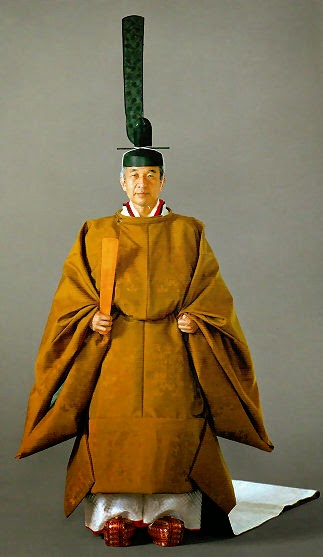
On the world stage, the Emperor has been, perhaps even more important over these last 25 years. His reign has seen the start of Japan reemerging as a force in world affairs and as a major military power (even if it is not, legally, a formal military). Japan deployed forces (in a non-combatant capacity) abroad for the first time since World War II, showing an increasing willingness to put the past behind them and become more self-sufficient in defense matters. Of course, this has not always been welcomed by those in other countries and bigoted elements at home and abroad (though they despise each other) have both sought to cling to memories of the war and keep Japan shackled to the past, a focus of hostile and suspicious feelings. However, so far, they have been unsuccessful thanks in no small part to the actions of the Emperor himself. In contrast to the narrow-minded chauvinism of the radicals, the Emperor has traveled the world, solidifying relations with allies, renewing old friendships and forming new and better relations with foreign countries as the embodiment of a confident, peace-loving, mature Japan. He has struck just the right note on every occasion, expressing regret for past events but honoring past heroism and sacrifice, acknowledging history but not being enslaved by it. Rather than carry on old grudges, the Emperor has set his focus on strengthening the Japan of today and tomorrow by goodwill and strong friendships in the international community. And, where Japan has been met by bigotry, the Emperor has taken the moral high ground, meeting such animosity with polite kindness, an open mind and an outstretched hand. Such warmth and dignity on his part has served more than once to highlight the immaturity of those powers which cling to bitterness.

Throughout his reign, the Emperor has seen a number of natural disasters afflict his country. There has also been an increase in tension with Japan’s closest neighbors with harsh words and military scares from China, Korea and Russia. This, naturally, has led to Japan placing more emphasis on national defense and this, in turn, has provoked protests from Korea, China and Russia with China and Russia in particular clinging to the memory of World War II and wishing to, in their words, “preserve the post-World War II world order” which of course would include a powerless Japan. However, so far, their efforts to frighten other countries and divide Japan and her closest allies have proven mostly fruitless, thanks in no small part to the Emperor himself. He has always made it clear that he values nothing higher than peace, remembering the horrors and ruination of the war very well himself, and he has always been ready to reach out in friendship to any country. His actions have shown the rest of the world that any tensions, such as between China and Japan, are not being instigated by Japan but by China. The Emperor has also been of immense benefit in strengthening existing friendships with American and European powers as well as forging new and better relations with other Asian countries such as India.

Monday, April 28, 2014
Photos of the Presidential Visit with the Emperor


Tuesday, January 7, 2014
Congratulations on the Silver Jubilee Year


Sunday, April 14, 2013
The Taisho Emperor

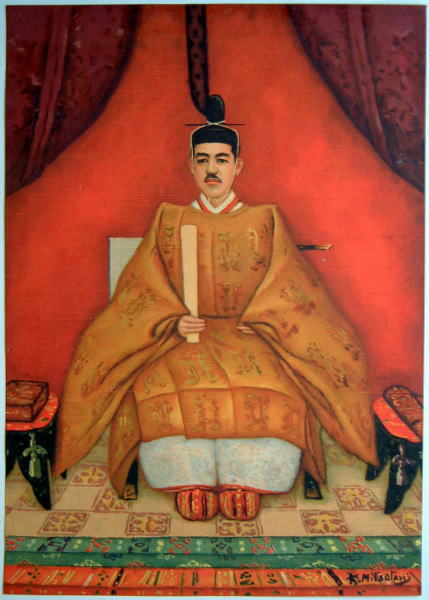
In 1898 the Crown Prince began attending sessions of the House of Peers in the National Diet to learn about politics and military and diplomatic affairs as part of his preparation for the throne. He hosted receptions for foreign diplomats and showed good conversational skills. French and Chinese officials were impressed that the Crown Prince could converse with them in their own languages. He became very interested in the western world and was fond of speaking French, sometimes speaking French and Japanese at the same time which the Emperor did not always find amusing. For a time he even sported a long, upturned moustache in the fashion of the German Kaiser Wilhelm II. Crown Prince Yoshihito also started undertaking official tours on behalf of the Emperor, visiting naval installations, factories, schools, temples and government offices; keeping an eye on how the rapid modernization of Japan was progressing on every level. Yet, there did seem to be something not quite “right” about the heir-to-the-throne and this worried the imperial court a great deal. So, when the time came for him to marry in 1900 care was taken to choose a bride of remarkable intelligence, bearing and speech.

Not long after, in 1912, the Meiji Emperor passed away and Crown Prince Yoshihito became Emperor of Japan. However, it was not quite the glorious occasion one usually associates with a royal succession. The mental health afflictions of the new Emperor had been increasing and he was beginning to display a growing number of physical handicaps as well. Again, some of his odd behavior has been rather exaggerated but, nonetheless, the Imperial Household was extremely worried about protecting the public image of the Emperor as well as his own health. As a result, the Taisho Emperor rarely appeared in public and, indeed, seldom ventured beyond the walls of the Imperial Palace. Within ten years of his enthronement he had ceased all official duties and Crown Prince Hirohito was appointed to carry out his obligations for him, being named Prince Regent in late 1921. He remained secluded from the outside world, carefully attended by his devoted Empress, and kept informed of national events by his son via carrier pigeons. After coming down with pneumonia the Taisho Emperor suffered a heart attack and passed away on December 25, 1926 at the Imperial Villa in Hayama at the age of only 47.
Wednesday, April 10, 2013
The Showa Emperor


Nonetheless, from the time of his youth when the alliance was intact, Hirohito had been greatly impressed by the British, an island nation like Japan, which ruled a vast empire and which was based on a monarch that reigned but did not rule. This basic system would be one Hirohito held to throughout his time on the Chrysanthemum throne. In 1924 he married his distant cousin Princess Nagako Kuni and the two eventually had a large family of five girls and two boys though not all long survived. In 1926 the Taisho Emperor died and Hirohito formally became the Emperor of Japan with the era name of Showa (“Enlightened Peace”). However, this was not to be a time of political peace for Japan which was still struggling to modernize, industrialize and, to some extent, westernize while at the same time fighting to maintain their traditional culture and values against subversive new threats from abroad.

The Emperor did, however, like most Japanese at the time, realize that they needed secure sources of raw materials to feed their economic recovery and overseas expansion was the way to accomplish this. It was the way every other great power operated and what they had all been doing for centuries; why should Japan be left out? The Emperor did not object to the takeover of Manchuria and he was genuinely kind and supportive when meeting with the last Emperor of China who was placed on the Manchu throne. He had a more clear grasp on world affairs than he is often given credit for. He sympathized with the plight of his fellow monarch, did not look kindly on the corrupt and chaotic Republic of China and viewed the USSR as a terror. Yet, he was not a part of running the government or the military which, especially in China, often acted on its own with its own agenda quite apart from Tokyo.

After the stunning success at Pearl Harbor the Emperor again broke tradition by directly questioning the flight commander, Mitsuo Fuchida, whether any civilian areas had been hit in the bombing (they were not). This was a great concern to him and the attacking forces had been told repeatedly that only military units and installations were to be targeted. Throughout the rest of the war the Emperor did what he could to boost morale and give helpful advice. Given the behavior of the military on certain occasions this is often made to seem sinister but it should not be considered outrageous that the Emperor of Japan wanted his country to be victorious. When it became clear that Japan would lose the war he was not the first to face this fact nor was he the last and when he determined that the time had come to negotiate an end to the war he was opposed at every turn.

Many in the US and other Allied countries wanted the Emperor put on trial for war crimes; holding him responsible for all actions of the military who all served in his name. However, General Douglas MacArthur, commander of the Allied occupation forces, was adamant that the Emperor had to be kept in place. His status was diminished and he was forced to renounce his divinity but he was a symbol of such great importance that MacArthur feared Japanese society would come apart if he was removed. Instead, the Emperor would henceforth be the “symbol of the state” with no political power or role. Emperor Showa had to reinvent himself as a modern, more western-style “people’s monarch”. He tried to make the occupation and the unprecedented changes Japan was going through at breakneck speed go as smoothly as possible.

Subscribe to:
Posts (Atom)