Showing posts with label bio. Show all posts

Wednesday, April 8, 2015

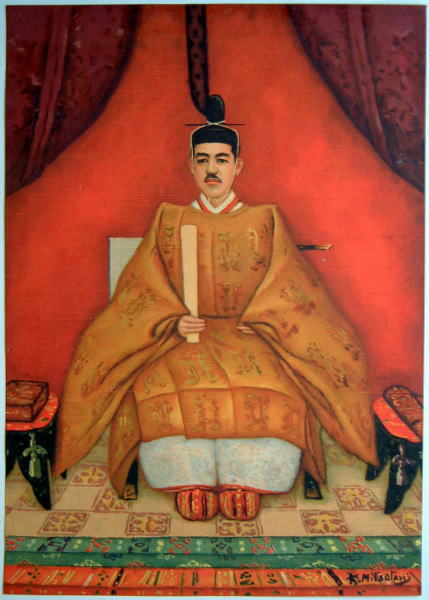
The Meiji Emperor

Few other monarchs in world history presided over such a crucial period for their country as the Meiji Emperor of Japan. Few lived through such dramatic changes and fewer still managed to master such changes and successfully direct them to the benefit of their country as a whole. Emperor Meiji did all of these things. Born into a land of feudalism and isolation, very advanced in traditional ways but which had fallen increasingly behind the rest of the world in others, Emperor Meiji presided over the end of Japanese isolationism, the end of the shogunate and the restoration of power to the monarchy, a period of rapid political, economic, military and educational modernization and the rise of Japan to be the preeminent regional power of East Asia, soon to become a major player on the world stage. This pivotal period of Japanese history was certainly not something that the Meiji Emperor himself would have ever expected. In most cases, the changes that occurred, even the famous “Meiji Restoration” itself, was not something he personally directed but his influence and his actions or inaction was absolutely central to exactly how things turned out, creating the Empire of Japan as it existed from the restoration until the end of the Second World War.

His Imperial Highness, Prince Mutsuhito was born on November 3, 1852 in the old imperial city of Kyoto, the only surviving son of His Majesty Emperor Komei. His mother was the imperial consort Nakayama Yoshiko though it was many years until he was aware of who his real mother was. Known as Prince Sachi, he was carefully looked after by his grandmother until, as a young child, he was taken to the Imperial Palace (Gosho) to be raised and educated in traditional fashion. Only a year later the “Black Ships” of U.S. Commodore Matthew Perry arrived and demanded that Japan open ports to trade with the United States and establish diplomatic relations. The ruling Shogun realized that the previous policy of isolationism was no longer tenable but delayed making any agreement with the Americans. The Emperor was opposed to any trade or friendship with foreign powers but by consulting the imperial court increasingly, unlike in the past, the wheels were already turning toward what became the Meiji Restoration. The Americans pointed out that China had just been beaten by Great Britain in the Opium Wars and that if Japan persisted in spurning contact with foreign powers, France, Britain or Russia might deal similarly with Japan and seize control of Japanese territory. Most of the Japanese leadership realized this was true but were divided on how quickly Japan should open up to trade and communication with the outside world. Emperor Komei remained staunchly opposed but was himself in a difficult position in how to deal with the problem as he was against the policies the Shogun was pursuing but also wanting nothing to do with rebel forces that wanted to oppose the shogunate itself.

At a critical point, the Emperor ordered the expulsion of all foreigners (his many fervent prayers for the gods to kill them all by means of natural disasters proved fruitless) and as local authorities had signed agreements with various foreign powers, there were targets on hand for Japanese warriors to attack. There was, of course, retaliation but the government also took action to suppress these forces and reassure the rest of the world that Japan was a country of law and order which would keep its agreements. There was then civil war and deep divisions in Japan when Emperor Komei died in 1867 at the age of only 37. The cause of death was smallpox and while the vaccination against this disease was known in Japan, the strict adherence of the court to traditional medicine only meant that the Imperial Family was especially vulnerable to illness (Meiji, however, was secretly vaccinated as a child). So, it was at a time of great crisis, at the age of only fourteen, that Emperor Meiji ascended the throne as the 122nd Emperor of Japan. While he continued his studies and performed the traditional rites, warring factions continued to struggle for or against the last Japanese Shogun, Tokugawa Yoshinobu who had established closer ties to a number of foreign powers in an effort to modernize the military and strengthen the shogunate.

As with most things in Japan, the civil conflict was complicated but could be seen as a clash between the Shogun and the imperial court to determine who would ultimately rule Japan. In the end, the imperial court was victorious. This has sometimes been put forward as “traditional” Japan fighting against the forces of modernity and representing a xenophobic hatred of foreigners and all the new ideas and technologies they brought to Japan. This is completely untrue, Japan had always been eager to embrace technological innovation and it was the shogun who was first seen as the most open to the foreigners, not the imperial court and, in any event, both sides had their own foreign allies with the French backing the shogun and the British and Americans backing the forces of the Emperor. The restoration of power to the monarchy started with rebel lords upset by the opening up policy of the shogun, as was Iwakura Tomomi who played a central part in the process but this issue eventually evaporated and the imperial court pressed on because of a desire for order, unity and an overall strengthening of the nation, even though part of the disorder that alarmed them was that done on their own behalf. Major fighting broke out because the shogun agreed to hand over power to the Emperor only to later try to take it back. When it came down to who was ultimately held to hold supreme authority in Japan, there was no question that it was the Emperor and so the “Meiji Restoration” was formally declared on January 4, 1868. Iwakura stated that the actions of the court were completely in accordance with the wishes of the young monarch and there is no way to confirm or dispute this as the Emperor himself did not leave any indication of his own views on the subject.

What is known for certain is that the Emperor presided over the changes in government and was present for some very heated arguments between the pro- and anti-shogun factions and never intervened to call a halt in favor of the fallen shogun. It can only then be surmised that he approved of these changes and, based on his overall character, was likely of the view that such division and internal struggles were proof that a new system, a truly national one based on shared loyalty to one sovereign rather than local feudal lords, was what was best for Japan. The fears of those opposed to involvement with foreign powers may have been exaggerated but they were not unjustified. However, Japan would have to modernize and strengthen if it were to have any chance of surviving as an independent country and that is what Emperor Meiji was focused on. Soon, the Emperor announced the abolition of feudalism in Japan and oversaw the transition to a more democratic, representative form of government and, eventually, the adoption of a written constitution. At one point, he even took personal command of the imperial troops sweeping up the last of the pro-shogun rebel forces. By his actions, he set a clear example; Japan would adapt and move forward in order to improve but it would be done by the Japanese themselves and in their own way, embracing modern methods but retaining traditional values.

So it was that Japan began to advance at a rapid pace, establishing the institutions that would govern the Empire of Japan for its duration. The samurai of old became the officers of the Imperial Army, the daimyos became governors in imperial service and students went to study abroad to gain the latest knowledge. The British were an obvious example to follow and the Royal Navy in particular was the model on which the new Japanese Imperial Navy was built with Japan quickly gaining its first modern, armored warship, an ironclad originally built in Europe for the Confederate navy in America. The Emperor personified this embracing of new ways while holding on to tradition. In terms of government, he appointed key officials but did not personally rule the country and generally endorsed whatever course of action his ministers decided to pursue. He often showed reluctance to meet with foreign dignitaries but, when doing so, was always extremely polite and friendly, giving each the impression that he had been shown special treatment.

At the outset, there were some radicals who went so far as to wish for the monarchy to be abolished all together in the stampede to embrace the new and throw out the old and toward the end of his life several anarchists were arrested for plotting to assassinate him, however, his leadership, dedication and moral authority ensured that while Japan would advance technologically, traditional values were also upheld and the monarchy became more central to Japanese life and the emperor more revered than ever before. In terms of foreign relations, the Meiji Emperor was the greatest asset Japan had with many European and even American visitors hailing him as the greatest sovereign in the world of his time. However, the Emperor was sometimes disadvantaged by the fact that his ministers did not always keep him completely informed as to their plans and actions. This was particularly true in regards to the growing Japanese involvement in Korea where the Emperor had an incomplete view of the true state of affairs. First, however, was the problem of the First Sino-Japanese War which broke out in 1894.

This came after a series of events such as struggles between China and Japan over influence in Korea, Chinese soldiers running rampant in Nagasaki and the shutting off of food exports to Japan. The Emperor was always concerned with protecting Japanese people wherever they were but when events led to the outbreak of war he was extremely upset. When asked to send envoys to the tomb of Emperor Komei and the Ise Shrine to announce the outbreak of hostilities, the Emperor replied angrily, “Don’t send anybody. I have not been in favor of this war from the start. It was only because cabinet ministers informed me that war was inevitable that I permitted it. It is very painful for me to report what has happened to the Ise Shrine and the tomb of the previous emperor.” Later, he relented an sent envoys to Ise and Kyoto but it was obviously greatly troubling to him. He worried that other powers might intervene to the detriment of Japan, detested seeing his people killed and he had a great deal of respect for the traditional culture of China. However, once the decision had been made, he gave his full support and moved his headquarters to Hiroshima to stay in closer contact with the military forces engaged in Korea and China. As it turned out, to the surprise of all, Japan won a swift and stunning victory in the war, ostensibly for the independence of Korea.

In the aftermath, tensions continued to mount between Japan and Korea as well as between Japan and Russia. The intervention of Russia, France and Germany to force Japan to return the Liaotung Peninsula to China (which was then leased by Russia) reinforced the Emperor’s concern over foreign adventures. From the questions posed by the Emperor about the situation in Korea, it seems that he did not entirely believe the idyllic scene presented to him by his officials about Japanese-Korean friendship. When war came with Russia, the Emperor again showed signs of anxiety over the conflict but less reservations than he had about the war with China. It seemed clear to almost everyone in the government that Russia was not being sincere in the search for a diplomatic solution to their problems but was simply playing for time. Nonetheless, when war did come, the Emperor (and the Empress) showed great gallantry and insisted that greater care be taken to maintain discipline and prevent any acts of cruelty. Because of this, captured Russians were treated with great humanity and consideration. The Emperor also showed his gratitude for the support and sympathy of the United States and Great Britain in the conflict and the English-language press around the world was full of the highest praise for Emperor Meiji.

With no more competition, Japan and Korea signed a number of treaties, each bringing the two countries increasingly closer together. There was correspondence between the Korean and Japanese emperors and the Meiji Emperor showed a deep and genuine concern for his Korean counterpart. When the Crown Prince was brought to Japan to be educated, the Emperor treated him like a member of the family. Indeed, some thought he treated him better than his own son. Likewise, the Korean emperor showed a great deal of trust and admiration for the Emperor of Japan so that when Korea was finally annexed by Japan in 1910 the Meiji Emperor expressed his satisfaction with this resolution and the firm conviction that Korea would benefit from it. He had not been told of the extent of Korean opposition to Japanese rule and the Korean monarch was likewise hardly in a position to be completely candid in his letters but he expressed his hope and trust that under Emperor Meiji the peace of East Asia would be maintained and that everything would work out for the best. His actions, he stressed, were born out of a genuine desire to do what was in the best interests of his people. Tensions would continue to fester on the peninsula but in Japan, the ordinary person saw only success and reasons for optimism. Since the restoration, the Meiji era had seen Japan modernize and expand in strength and influence so that the Japanese flag was flying over Sakhalin, Korea and Taiwan.

What problems would develop were ones that the Meiji Emperor would not live to see. Troubled by increasing health problems, the revered monarch died on July 30, 1912 at the age of 59, survived by his wife, three of five concubines and five of his fifteen children. At his passing, he was praised by people all over the world, naturally mostly in those countries with whom Japan had the closest ties of friendship. The British press was effusive and even the American press, which did not often praise any monarch, professed that the Meiji Emperor was one of the greatest world leaders of all time. Even the French and the Chinese, which were not so well-disposed toward Japan, saluted his achievements. The Russian press was not left out in praising the Emperor, though they did affirm that he did not rise to the level of Peter the Great. None could fail to be impressed by how far Japan had come in such a short space of time under the leadership, active or passive, of Emperor Meiji. The country which had been a patchwork of warlord fiefdoms at the time of his birth had opened commerce with the world, industrialized, modernized and by the time of his death stood among the ranks of colonial empires and the most powerful country in East Asia. It was truly remarkable and in all of this the Emperor was no passive observer.

As a monarch, Emperor Meiji was, as if by divine design, just the sort of sovereign Japan needed at just that critical period of history. He was mindful of tradition but open to change and innovation when it was beneficial. He did not push particular policies but used his moral authority to guide them in the right direction. He was deeply concerned for his people, very frugal, was able to read people and knew how best to handle almost anyone in any situation. Above all, he was a dutiful monarch and his most frequent displays of temper usually involved some politicians who were shirking their duty. He worked tirelessly for the advancement of his country and the peace and stability of the region. Toward the end of his life, his greatest concern and complaint was that Japan had become so modern and prosperous that many people were becoming frivolous. He did not actively take part in governing but this was not surprising and by keeping the monarchy aloof from such mundane affairs, enabled it to retain its lofty stature and be ever more valuable as a focus for national unity and guardian of the national spirit. He was, in every way, an extremely successful monarch and will always occupy a unique place of distinction amongst the long list of emperors of Japan.

Thursday, July 10, 2014

Empress Kōjun 香淳皇后

There are certain monarchs that have always impressed me as being ‘a monarchists’ monarch’. Putting aside their positive or negative abilities as national leaders, these were monarchs who really believed in monarchy, in traditional authority and who had a monarchist sort of mindset that guided them in their lives. One does not always think of ‘a monarchists’ consort’ but Her Majesty Empress Kojun of Japan was certainly such a consort. She was the longest-living Empress consort in Japanese history and she was the last living link with the old Japan that existed at the turn of the last century. She lived through both world wars, saw the Empire of Japan reached its zenith of power and prestige as well as seeing it utterly destroyed. Happily, she also lived to see the new State of Japan come roaring back as a successful and industrious country, the second biggest economic power house in the world. Yet, through it all, she was known as the most attached to traditional ways and customs even when almost everyone else had seemed to abandon them. This has caused some historians and commentators to view her negatively but only because they focus on one narrow aspect rather than taking into context the whole portrait of this grand and remarkable lady who lived a life of service and duty.

She was born Princess Nagako on March 6, 1903 in Tokyo, Azabu district, the daughter of Prince Kuniyoshi Kuni and Chikako Shimazu. Prince Kuni was the head of one of the cadet branches of the Imperial Family, being descended from a past emperor from the thirteenth century. Her mother was of aristocratic background, coming from the family of a prominent daimyo. For little Princess Nagako, her upbringing was typical of the old aristocracy of the time but her destiny was revealed to her earlier than most and so most of her childhood was quite unlike those of other girls. She attended Gakushuin, at that time the Peers’ School, Girls’ Department in Tokyo alongside Princess Masako Nashimoto who would go on to marry the Crown Prince of Korea. She was only eleven years old when the path for her life was chosen for her. On January 14, 1914 HM Empress Sadako invited a number of girls of suitable rank to tea at the Concubines’ Pavilion in the Imperial Palace. Watching through a hole in a screen was Crown Prince Hirohito, who was told to pick one to be his future bride. He chose Princess Nagako and the arrangements were all made that one day they would be married. Although she was his preference, it was certainly not a “love match” as the two were very young, had never met and knew nothing about each other at all. It was all a matter of duty. Happily, it would not remain so.

Even then, there were some grumblings about the Crown Prince making a troublesome choice. Princess Nagako had imperial and noble ancestry but it was not of the highest order most expected and she was not from the Fujiwara clan that most imperial consorts had been from. Several prominent and very powerful people objected to the match and demanded that the Imperial Household Agency call it off but Prince Kuni was just as adamant that no such thing happen, threatening to kill his daughter and then himself if this was done. Thankfully, no such drastic measures were necessary as when things became really heated HM the Taisho Emperor stepped in and endorsed Princess Nagako as his future daughter-in-law and that settled it. After that, to have questioned the match would be to question the divine will of the Emperor, which did not happen. Preparations then went ahead with the Princess spending her time until she was of a proper age to marry being given an intensive training course on how to be a Crown Princess and future Empress. The formal engagement was announced in 1921 and the wedding set for 1923. Everything was done to familiarize the princess with her duties, obligations and the ceremony and protocol of the imperial court. She was, for example, one of the last people alive in Japan who could understand the unique style of language used by the Emperor and inner court in the old days which disappeared after World War II.

However, there was to be no imperial wedding in 1923 as it was in that year that a horrific earthquake struck Tokyo that devastated the city and killed around 10,000 people. The marriage was postponed for a year while all the strength and energy of the nation was funneled into dealing with the natural disaster. For the Princess, her education continued and many forget what an intelligent, cultured and well-rounded lady she was, learning French, studying Chinese and Japanese literature and numerous other diverse subjects, being a talented artist and singer as well as adept at the piano, Japanese harp and violin. During all that time she only met her future husband nine times and the two were never alone but finally the grand occasion came on January 26, 1924 when the two were married. Before the end of the next year, the Crown Princess became Empress consort with the passing of HM Emperor Taisho and the elevation of Crown Prince Hirohito to the Chrysanthemum Throne. This was only shortly after the birth of their first child, HIH Shigeko, Princess Teru earlier in the month. Of course, there were rules to be followed for such an occasion but the Empress was still a more involved mother than most of her predecessors had been and she took the job of motherhood very seriously.

As the Emperor and Empress had been brought together almost as strangers, it was to be expected that, early on, their relationship seemed rather formal and distant. However, it was all a matter of getting to know each other and as they did, they became a very loving couple, greatly attached to each other. The Empress seemed to view her primary occupation as being to shelter and support her husband, to care for him and ensure that he was able to give his best in his own duties and obligations. This, she did very well and the Emperor had no more attentive guardian and caretaker than his Empress for as long as he lived. The devotion the Emperor had for her was displayed only a few years after the marriage. In 1927, 1929 and 1931 the Empress gave birth to three girls in succession and many began to worry if a son and heir would be forthcoming. In 1932 such talk only increased as the Empress suffered a miscarriage and many began to urge the Emperor to take a concubine to ensure the survival of the dynasty. The Meiji Emperor had had several concubines and it was quite common but the Emperor would not hear of it. He was a ’one woman man’ and the Empress was the only one for him and he would have no other. As if to prove the imperial decision correct, in 1933 the Empress gave birth to HIH Crown Prince Akihito, followed by another prince in 1935. In all, they would have seven children, five girls and two boys.

One can only imagine the strain this was on the Imperial Family, having to deal with such issues during such critical years as the early 1930’s which saw the occupation of Manchuria, the restoration of the Empire of Manchukuo and the outbreak of hostilities with China following the Marco Polo Bridge Incident. Through it all, the Empress was a strong source of comfort and support for her husband and did her part whenever she could, even after the outbreak of the wider war in 1941. She took part in the ceremonies celebrating the surrender of Singapore, the largest British bastion in the Far East and when the war came to Japan the Empress had the children sent to safety but remained by the Emperor’s side in Tokyo, enduring the intense bombing in solidarity with the people. The Empress would later describe this as the worst period of her life, not only because of the bombing and immense human suffering but also because of the pressures, weighing down from all sides on the Emperor and the real worry when the war finally came to an end that he might be taken away and executed. The immense, frenzied changes that took place after the war were also difficult for her to deal with but she never complained. As the monarchy was being re-invented for the new State of Japan, the Empress considered it her duty to support her husband in everything he did and every decision he made.

What finally seems to have been too much was when HIH Crown Prince Akihito decided to get married. The two older daughters had already married and lost their status because of the new post-war laws that downsized the Imperial Family but the Empress seems to have thought that, for the heir to the throne, the traditional way would still be followed. Many of the old aristocracy were upset when the choice of the Crown Prince fell on Michiko Shoda, a commoner with a Catholic education. No one knows what was said behind closed doors but the prevailing sentiment is that the Empress was against such a choice. When it went ahead anyway, all sorts of rumors were spread around of the Empress being cold, distrustful and even spiteful toward Crown Princess Michiko, much of that probably being exaggerated. What is true is that the Crown Princess had one or two nervous breakdowns in the years after her marriage and perhaps the Empress was showing more concern than most people think. Her motives should not be questioned and one could speculate more positively that she had the best of intentions in being reluctant about the Crown Prince marrying a commoner.

After all, consider her own life; she had come from the Imperial Family and aristocracy and yet there were still strenuous objections to her own marriage. She was given years of training for the high honor and privilege of being Empress consort and even then, she knew how difficult the adjustment was for her. Perhaps she had not realized how much attitudes had changed since the time of her marriage, perhaps she wanted to spare the young girl from a life she felt she was not suited for. Finally, there is also the simple fact that the Empress was someone who took tradition and history and the sacred nature of the Imperial Family very, very seriously. When that is the case, as we are seeing with a number of issues today, one can easily and often be accused of being unkind or even hateful simply for holding firm to the traditions and values that were once taken for granted by all. In any event, that was certainly the most controversial period of her life, for most people today anyway, but much of it has probably been over-blown. It is not as though daughters and mothers-in-law have always gotten along famously no matter how high or low born they might be. It is a common story all over the world. On the whole, the family remained happy and the Empress had the joy of becoming a grandmother. She visited Europe and the United States with HM the Emperor and became known as the “Smiling Empress” because of her friendly disposition, but while perfectly genuine, few foreigners knew that it was the sort of positive countenance and pleasant demeanor that was instilled by years of preparation.

To the very end, she was a dutiful and attentive wife and was heartbroken when, on January 7, 1989, His Majesty the Showa Emperor departed this life. Her Majesty was re-titled as Empress-Dowager but her own health had deteriorated so much while she focused all of herself on the Emperor that she was too frail even to attend his funeral and after his death she went into seclusion for the rest of her life. Her Majesty, Empress Dowager Kojun died on June 16, 2000 surrounded by her immediate family, at the age of 97 in the Fukiage Omiya Palace in Tokyo. She was buried near her husband at the Imperial Cemetery on July 25, 2000. Her passing marked the end of an era and a last, living, connection with the old Empire of Japan that had existed since the Meiji Era was lost with her. It was a great sadness but Japan was also fortunate to have had such a remarkable lady for so long. She was a shining example of the best virtues of old Japan and the traditional elite. She lived by an ancient code, was firm and unyielding in her principles and showing no favoritism, was devoted to maintaining what had been handed down. She was a devoted wife and mother, a supportive and dutiful Empress consort, a faithful, strong and tireless daughter of Great Japan.

Sunday, April 14, 2013

The Taisho Emperor


His Imperial Highness Prince Yoshihito of Japan was born at the Aoyama Palace in Tokyo on August 31, 1879 to Their Majesties the Meiji Emperor and his consort Empress Shoken. He was not the firstborn son but, as his two older brothers died very young, Prince Yoshihito eventually became crown prince and heir-to-the-throne. Prince Yoshihito himself was often in frail health. As a newborn he came down with cerebral meningitis and, although he was able to recover, he was never extremely robust physically for the rest of his life. Until he was seven-years-old he was raised in the household of Prince Nakayama Tadayasu. In 1885 he was transferred to the Aoyama Detached Palace and started his formal education, studying the usual mixture of reading, writing and arithmetic but with added lessons on the Shinto religion, Japanese morality and the place of the Emperor and Imperial Family in society. In the afternoons he exercised by playing sports, however, his studies and activities were often interrupted by his recurring fevers. The following year he began to take his lessons with a select group of other students from a local school for the aristocracy to learn how to interact with others.

On August 31, 1887 Prince Yoshihito was formally declared heir-to-the-throne and Crown Prince of Japan with his formal investiture being held the following year on an auspicious date chosen by the court astrologers. He continued his education but was not a particularly remarkable student. Because of some of his later behavior some have exaggerated the disabilities of the Taisho Emperor to the point that he is portrayed as totally incompetent. This was definitely not the case for while he lagged behind in certain subjects he excelled at others. He had a remarkable gift for languages and was an adept horseman. Much of his difficulty doubtlessly originated in his poor health which did not allow him to devote the time to his studies that was necessary. He spent a great deal of time on the coast where the climate was deemed healthier for his fragile disposition. He was finally withdrawn from school and tutored privately after being placed in the care of Prince Takehito by the Emperor, with whom he would become close friends.

In 1898 the Crown Prince began attending sessions of the House of Peers in the National Diet to learn about politics and military and diplomatic affairs as part of his preparation for the throne. He hosted receptions for foreign diplomats and showed good conversational skills. French and Chinese officials were impressed that the Crown Prince could converse with them in their own languages. He became very interested in the western world and was fond of speaking French, sometimes speaking French and Japanese at the same time which the Emperor did not always find amusing. For a time he even sported a long, upturned moustache in the fashion of the German Kaiser Wilhelm II. Crown Prince Yoshihito also started undertaking official tours on behalf of the Emperor, visiting naval installations, factories, schools, temples and government offices; keeping an eye on how the rapid modernization of Japan was progressing on every level. Yet, there did seem to be something not quite “right” about the heir-to-the-throne and this worried the imperial court a great deal. So, when the time came for him to marry in 1900 care was taken to choose a bride of remarkable intelligence, bearing and speech.

A better choice would have hardly seemed possible and on May 10 the Crown Prince married the 15-year-old daughter of Prince Kujo Michitaka, Kujo Sadako (later known as Empress Teimei) of the illustrious Fujiwara clan. She proved to be the ideal imperial wife, ever supportive of her husband and compensating for his deficiencies in a most delicate way. The two were a devoted couple and within a year of their wedding the first of their four sons were born, Prince Hirohito, the future Showa Emperor. When war approached with the Russian Empire, Crown Prince Yoshihito was appointed to the rank of colonel in the army and captain in the navy though, of course, he was denied actual service. Nonetheless, he took his military duties and the war very seriously and was constantly visiting the troops, inspecting installations and encouraging the wounded. After the war he took it upon himself to learn Korean (though he never became fluent at it) after making a tour of Korea and meeting the Korean Royal Family; his visit marking the first time that a Crown Prince had ever left Japanese soil.

Not long after, in 1912, the Meiji Emperor passed away and Crown Prince Yoshihito became Emperor of Japan. However, it was not quite the glorious occasion one usually associates with a royal succession. The mental health afflictions of the new Emperor had been increasing and he was beginning to display a growing number of physical handicaps as well. Again, some of his odd behavior has been rather exaggerated but, nonetheless, the Imperial Household was extremely worried about protecting the public image of the Emperor as well as his own health. As a result, the Taisho Emperor rarely appeared in public and, indeed, seldom ventured beyond the walls of the Imperial Palace. Within ten years of his enthronement he had ceased all official duties and Crown Prince Hirohito was appointed to carry out his obligations for him, being named Prince Regent in late 1921. He remained secluded from the outside world, carefully attended by his devoted Empress, and kept informed of national events by his son via carrier pigeons. After coming down with pneumonia the Taisho Emperor suffered a heart attack and passed away on December 25, 1926 at the Imperial Villa in Hayama at the age of only 47.

Thursday, April 11, 2013

Empress Michiko


The current Empress consort of Japan has been a groundbreaking figure in many ways. She was the first commoner to ever marry into the Japanese Imperial Family and has easily been the most visible, prominent and widely traveled of any consort in Japanese history. Her life has not always been easy but she has proven to be exactly what Japan, in this day and age, expects of an empress consort. She was born on October 20, 1934 in Tokyo, the daughter of a wealthy industrialist and flour mill tycoon. Her education in Tokyo was interrupted by the American bombing campaign during World War II but she returned after the war was over and attended a prominent private Catholic school. Over the years this has been the focus of some trumped up controversy with rumors spread that the Empress is privately a Catholic.

She also started her higher education in a Catholic institution, graduating from Tokyo’s Sacred Heart University in 1957 with a literature degree. She later attended Harvard in the US and Oxford in the UK where, aside from her formal studies, she gained a good grasp of the English language. It has been alleged by certain writers that during this time there was an attempt to arrange a marriage between Michiko and the now famous reactionary writer Yukio Mishima. If so, nothing came of it and in August of 1957 she met the man who was to become her husband, the then Crown Prince Akihito of Japan at a tennis match in Karuizawa. The two hit it off and by the end of the next year the Imperial Household Agency formally approved and announced their engagement.

The marriage of a common-born girl, even a wealthy one, to the heir to the Chrysanthemum throne came as a great surprise to the Japanese public. Some hard-line traditionalists were outraged by the match but, considering all of the drastic changes Japan had recently been through, most took it as it came and soon came to love the pretty and intelligent young lady their crown prince had chosen. On April 10, 1959 the two were married, despite the rumored opposition of the Empress Kojun. This objection on the part of Michiko’s mother-in-law went rather extreme at one point, depending on who one chooses to believe, but it is all rumors as the Japanese monarchy has always been very good about keeping any private troubles private.

In 1960 the Imperial couple welcomed their fist child into the world, Prince Naruhito, ensuring the succession for the immediate future, followed by Prince Akishino in 1965 and Princess Nori in 1969. Contrary to established tradition, the Crown Princely couple insisted on raising their children themselves to try to establish a more close and warm family bond. In 1989 their status was raised with the passing of the Showa Emperor at which point Akihito and Michiko officially became the Emperor and Empress of Japan. It was an immense responsibility to undertake and the IHA even admitted that Empress Michiko was having some health issues related to stress.

In the following years ever since Empress Michiko has been a devoted mother and a great source of strength to the Emperor, going on almost all of his trips and foreign tours making her, by far, the most widely traveled consort in Japanese history. She has shown herself to be a remarkably strong woman, adjusting to the immense difficulties of imperial life and succeeding brilliantly, becoming a beloved member of the Imperial Family and setting an example of what the Japanese ideal for a wife and mother should be while at the same time being a more modern woman than past consorts, very well educated and as adept at discussing history and literature as she is expert at playing the piano. She remains a very busy Empress attending hundreds of meetings every year on charitable and cultural topics, visiting areas all across Japan and assisting her husband in his official receptions and religious duties.

Wednesday, April 10, 2013

The Showa Emperor


The late Showa Emperor of Japan, Hirohito, was the longest reigning monarch in modern Japanese history and one of the most controversial. His reign saw the peak of Japanese power as well as the greatest devastation the country has ever suffered and was a turning point in history, the end of one era and the beginning of another. He was born on April 29, 1901 at the Aoyama Palace in Tokyo to Crown Prince Yoshihito and Crown Princess Sadako of Japan and was given the name and title of Prince Michi. His grandfather, the Meiji Emperor, died in 1912 and his father became Emperor Taisho of Japan. In 1916 he was formally named Crown Prince. He was given a mix of traditional and modern western education during his childhood and as a young man was the first Japanese royal to travel overseas to make Japan more visible on the world stage and strengthen foreign relations. For six months he traveled the world visiting Great Britain, the Netherlands, Belgium, France and Italy.

In 1921 Crown Prince Hirohito was named regent of the Empire of Japan due to the failing mental faculties of his father. Numerous political and diplomatic events of great significance happened during these years but perhaps none were to have such a far-reaching impact as the ending of the Anglo-Japanese alliance. This was done by Britain to placate the United States, Britain gambling that American friendship would be more beneficial than Japanese friendship. The leadership in Japan took it as an insult and tantamount to a betrayal. The course of history would show that America had no great love for defending the British Empire and making an enemy of Japan left all of the east Asian holdings of Great Britain vulnerable to a rising Japan. The Japanese were further angered by numerous treaties that followed aimed at limiting their naval power in comparison to the other major powers.

Nonetheless, from the time of his youth when the alliance was intact, Hirohito had been greatly impressed by the British, an island nation like Japan, which ruled a vast empire and which was based on a monarch that reigned but did not rule. This basic system would be one Hirohito held to throughout his time on the Chrysanthemum throne. In 1924 he married his distant cousin Princess Nagako Kuni and the two eventually had a large family of five girls and two boys though not all long survived. In 1926 the Taisho Emperor died and Hirohito formally became the Emperor of Japan with the era name of Showa (“Enlightened Peace”). However, this was not to be a time of political peace for Japan which was still struggling to modernize, industrialize and, to some extent, westernize while at the same time fighting to maintain their traditional culture and values against subversive new threats from abroad.

The Depression hit Japan especially hard. There were too many mouths to feed, too few raw materials to feed the new industrialization and many feared losing their own identity in the flood of foreign trends and ideas sweeping Japan. Governments rose and fell rapidly and the Showa Emperor himself was nearly assassinated by a Korean dissident in 1932. Amidst all of the tumult it was the military and the spiritual-political symbol of the divine Emperor that alone seemed capable of uniting the country, providing stability and a path to overcoming the current problems to achieve a vision of greatness for the Japanese Empire. Many have since come to view the Showa Emperor as complicit in the military takeover but such is not the case. When military officers tried to take power in a coup the Emperor ordered a crackdown and threatened to take charge of the troops himself to suppress them.

The Emperor did, however, like most Japanese at the time, realize that they needed secure sources of raw materials to feed their economic recovery and overseas expansion was the way to accomplish this. It was the way every other great power operated and what they had all been doing for centuries; why should Japan be left out? The Emperor did not object to the takeover of Manchuria and he was genuinely kind and supportive when meeting with the last Emperor of China who was placed on the Manchu throne. He had a more clear grasp on world affairs than he is often given credit for. He sympathized with the plight of his fellow monarch, did not look kindly on the corrupt and chaotic Republic of China and viewed the USSR as a terror. Yet, he was not a part of running the government or the military which, especially in China, often acted on its own with its own agenda quite apart from Tokyo.

Unlike many high-ranking Japanese the Showa Emperor did not welcome the alliance with Italy and especially Nazi Germany. It was only after the Axis forces in Europe seemed to have the war all but won that he finally, reluctantly, consented to the idea of Japan being partners with Germany and Italy. When his military came to him with the plan for war against the USA he was deeply troubled and doubted their grandiose aims could be accomplished, noting that they had not totally pacified China in the time promised and that the Pacific was considerably larger than China. Breaking with tradition, he shocked his council by addressing them directly about his wish for a peaceful solution to the problems Japan was facing but this did not stop the drive to war. He issued the declaration of war against the US and UK but was still concerned about how this conflict was carried out.

After the stunning success at Pearl Harbor the Emperor again broke tradition by directly questioning the flight commander, Mitsuo Fuchida, whether any civilian areas had been hit in the bombing (they were not). This was a great concern to him and the attacking forces had been told repeatedly that only military units and installations were to be targeted. Throughout the rest of the war the Emperor did what he could to boost morale and give helpful advice. Given the behavior of the military on certain occasions this is often made to seem sinister but it should not be considered outrageous that the Emperor of Japan wanted his country to be victorious. When it became clear that Japan would lose the war he was not the first to face this fact nor was he the last and when he determined that the time had come to negotiate an end to the war he was opposed at every turn.

After two atomic bombs were dropped on Japan there could be no more delay. Facing the threat of nuclear annihilation the Emperor took decisive action to order the surrender to save his country. He recorded an announcement that had to be smuggled out of the palace to the radio station because of an uprising by the military which was intent on fighting on to the death. The first time the Japanese people ever heard the voice of their divine Emperor was when the message came over the radio announcing the surrender. Japan would, as the Emperor said, “bear the unbearable”. For a country that had not known defeat in centuries and which had never been conquered by an outside force, his sentiments were sincere and correct. Japan surrendered, officially unconditionally, but with the assurance of the US that the fate of the Emperor would rest in the hands of the Japanese people who revered him.

Many in the US and other Allied countries wanted the Emperor put on trial for war crimes; holding him responsible for all actions of the military who all served in his name. However, General Douglas MacArthur, commander of the Allied occupation forces, was adamant that the Emperor had to be kept in place. His status was diminished and he was forced to renounce his divinity but he was a symbol of such great importance that MacArthur feared Japanese society would come apart if he was removed. Instead, the Emperor would henceforth be the “symbol of the state” with no political power or role. Emperor Showa had to reinvent himself as a modern, more western-style “people’s monarch”. He tried to make the occupation and the unprecedented changes Japan was going through at breakneck speed go as smoothly as possible.

Emperor Showa attempted to apologize for the misdeeds of Japanese forces during the war but was snubbed by MacArthur. He also refused to honor any war dead that included convicted war criminals. For the first time he visited the Japanese people and met them face to face -which took some getting used to for all concerned. He even visited the United States and was a crucial figure of tradition and stability during the tumultuous years that saw Japan change more radically and thoroughly that at any other time in her ancient history by far. After the longest reign in modern Japanese history Emperor Showa died on January 7, 1989 and was succeeded by his son HIH Crown Prince Akihito, the current Emperor of Japan. He was buried next to his father in the Imperial Mausoleum at Hachioji. His legacy has been debated ever since and he remains one of the most controversial as well as one of the most significant monarchs in Japanese history.