News is just coming in that at least one of the hostages held by the ISIS Islamic terrorists has been executed. Right now, the reports are that they are offering a "prisoner" exchange for the other. Of course, the Japanese citizen being held is not a prisoner but a hostage, ISIS is not a legitimate country and Japan is not at war with ISIS. This is terrorism plain and simple. Japanese officials are said to be holding an emergency meeting at this time concerning the tragedy. Our thoughts and prayers go out to the family of the murdered individual and the one still being held. Japan is a close-knit country, viewed by many as one, large, extended family under the benevolent, patriarchal figure of the Emperor. So our prayers also go out to Japan as a whole on this tragic occasion. We can only hope that Japan and the rest of the world will come together to wipe out these Islamic terrorists once and for all so that such despicable crimes can be stopped.
God bless Japan and Long Live the Emperor!
Saturday, January 24, 2015
Wednesday, January 21, 2015
Islamic State Attack on Japan
Just as Prime Minister Abe was visiting the Middle East, pledging to spend considerable sums in non-military aid to the region from Japan, terrorists of the Islamic State (ISIS or whatever one wishes to call it) were putting out a ransom video showing two Japanese hostages and threatening to behead them. This tragic situation teaches us a few things. For one, it is a lesson to Japan and many other countries around the world that Islamic terrorism is not just a problem for "some" countries to deal with but that it has an impact on everyone. Japan has never done anything to the detriment of any Muslim country, in fact, Japan has been one of the Middle East's best customers in purchasing oil. Even the aid given out by Prime Minister Abe was, of course, entirely of a non-military nature. Yet, Japanese civilians were targeted because these terrorists will target anyone they can get their hands on, whether they are American, European, African or Asian.
Secondly, this has shown how vulnerable Japan and Japanese citizens have been because of Article IX of the Constitution and how wise Abe was to initiate the reinterpretation of Article IX. It is something that cannot be done fast enough as this situation proves how imperative it is. After all, because of Article IX, Japan has very few options in dealing with this sort of attack on Japanese citizens. Japan cannot undertake any sort of rescue mission and, even if it could, how many JSDF personnel would have any experience in such operations? It also gives Japan very few options in finding other countries to give real support in an emergency. As it is now, the United States is the one and only official ally Japan has in the world, it is the only country that has given Japan a written promise that if anyone attacks Japan, America will be there to defend the country. Article IX is a major impediment to gaining more allies for the simple reason that it prevents Japan from reciprocating any military assistance. Why should any country pledge to help defend Japan if Japan cannot help defend them in return?
This crisis should be a "wake up call" to everyone in Japan who is still opposed to the reinterpretation of Article IX as it highlights just how dangerous the current interpretation is in a dangerous, globalized world where irrational enemies stand ready to attack anyone for any reason.
Secondly, this has shown how vulnerable Japan and Japanese citizens have been because of Article IX of the Constitution and how wise Abe was to initiate the reinterpretation of Article IX. It is something that cannot be done fast enough as this situation proves how imperative it is. After all, because of Article IX, Japan has very few options in dealing with this sort of attack on Japanese citizens. Japan cannot undertake any sort of rescue mission and, even if it could, how many JSDF personnel would have any experience in such operations? It also gives Japan very few options in finding other countries to give real support in an emergency. As it is now, the United States is the one and only official ally Japan has in the world, it is the only country that has given Japan a written promise that if anyone attacks Japan, America will be there to defend the country. Article IX is a major impediment to gaining more allies for the simple reason that it prevents Japan from reciprocating any military assistance. Why should any country pledge to help defend Japan if Japan cannot help defend them in return?
This crisis should be a "wake up call" to everyone in Japan who is still opposed to the reinterpretation of Article IX as it highlights just how dangerous the current interpretation is in a dangerous, globalized world where irrational enemies stand ready to attack anyone for any reason.
Monday, December 8, 2014
After Pearl Harbor, Lessons Learned
It was on this day in 1941 that United States President Franklin D. Roosevelt (Democrat) went addressed Congress about the attack on Pearl Harbor and requested and received a vote declaring war on the Empire of Japan. As I have pointed out before (here) Roosevelt was very misleading with the American public to say the least of it when it came to Pearl Harbor and (as discussed here) it was not true that the Empire of Japan wanted a war against the United States. The reason for that is simple enough as was proven by subsequent events; it was a war that all the military experts in Japan knew they stood very little chance of being able to win. The United States simply had Japan outmatched in terms of numbers, economic output, resources and industrial capacity. That fact itself was the main motivating factor behind the necessity for having the element of surprise in the attack on Pearl Harbor. Japan's only hope was to strike a crippling blow at the outset in order to stand any chance of winning or rather coming to a negotiated peace favorable to Japan in the long-term of the war. In the end, it didn't work out and many thousands of Americans lost their lives and Japan suffered immensely because of the conflict that never should have happened.
Despite what many people (in both countries actually) believe, Japan did not want to fight a war with the United States. It was something Japan was practically forced into, the Japanese government was backed into a corner and war was seen as the only way out. That really should not even be up for debate. However, what may surprise many people is that Japan did not really want to fight a war with China either and that was the event the United States seized upon to intervene against Japan, disapproval over the war in China. However, while Japanese forces had been fighting in China for about ten years, Japan had never declared war on China and the Republic of China did not declare war on Japan until after Britain and America had done so. At least as far as Japan was concerned, this was because Japan hoped that the "China Incident" could be ended. Japan hoped to come to some sort of agreement with the Chinese nationalists and was only concerned with the danger posed by the communist faction that had been gaining strength and was backed by powerful foreign interests.
The trouble in China began with the Marco Polo Bridge Incident, something which the Japanese did not start but which was probably provoked by Chinese communists because it served only their interests for Japan and the Chinese nationalists to go to war with each other. Later, during the talks between Japan and the United States to try to keep the peace between the two countries, one of the American demands was that the Japanese military forces be removed from China. This was something that Japan was prepared to agree to with the only concession being that a small force be left behind to deal with the communist threat which was all Japan was concerned about anyway. The problem was that there was a misunderstanding over this American proposal that was not clarified until after the war. The Japanese thought that the United States were demanding that the Japanese withdraw from Manchuria as well (which was then the Empire of Manchukuo) as the United States still considered Manchuria to belong to China. However, this was actually not the case and tragically it was only after the war that the Japanese learned that America did not mean to demand that they withdraw from Manchuria as well.
Communism was on the march in East Asia and Japan had every reason to be concerned. The Soviet Union had reached across Siberia to the Pacific, had taken control of Outer Mongolia, threatened Manchuria and was supporting the communists in China. Even the League of Nations commission led by the Earl of Lytton admitted that Japan had legitimate concerns about defending itself from expansionist communism. The Japanese civil and military leadership kept hoping that the fighting in China would end, hoping that the next victory would finally compel Chiang Kai-shek to come to terms and stop the fighting so they could focus on the communist threat. Even though the United States had taken a very pro-Chinese and anti-Japanese attitude, the government in Tokyo expressed its willingness for the United States to be the mediator in bringing about a peaceful settlement of the hostilities between China and Japan. Unfortunately, the Roosevelt government did not appreciate the threat that the Chinese communists represented. Among the international community, it was really only the Empire of Japan that recognized how great a danger Mao's communists posed to the peace and stability of East Asia.
The sad fact that no one else recognized this danger until it was too late and the Empire of Japan, which had been the best bulwark against communist expansion in Asia, was devastated by war. On the part of Japan, mistakes were certainly made regarding China though most of them were not a part of any official government policy. The only one which was probably an official mistake was the support for the Wang Jingwei government. He was not a very trustworthy fellow and the recognition of his government made it all but impossible for Chiang Kai-shek to ever come to terms with Japan. However, as far as the United States is concerned, the great mistake was in not recognizing the communist threat and going to war against the one country best equipped to deal with that threat. Fortunately, better late than never, the United States has learned the lesson. Of course, expecting any country to retract part of what has become the national narrative would be expecting too much but American actions speak louder than words and those actions indicate clearly that the lessons of the war in East Asia have been learned. Certainly, coming to this understanding has been helped by the fact that Communist China today is too powerful and too threatening to ignore. Today, unlike in 1941, the United States opposes Communist China and supports Japan as well as strengthening the Japanese Self-Defense Forces and the reinterpretation of the constitution to allow for collective self-defense.
Today, just like in those early days of communist aggression in East Asia, the Red Chinese are looking to expand and they are being supported by an expansionist Russia. However, this time Japan is not standing alone but has the pledged support of the United States as well as more friendly relations with almost every country in the region not being dominated by Red China. Tensions with South Korea are certainly problematic but in the worst case scenario they would have no choice but to join the non-communist powers opposing China or be dominated by the bandit government in Peking. As Communist China has become more aggressive and continues to build up its navy as a major offensive weapon, it is more important than ever to strengthen the ties of all the Pacific countries to form a defensive cordon around Red China. The Empire of Japan was the first to recognize the threat but everyone else can see it now and most are responding accordingly.
Despite what many people (in both countries actually) believe, Japan did not want to fight a war with the United States. It was something Japan was practically forced into, the Japanese government was backed into a corner and war was seen as the only way out. That really should not even be up for debate. However, what may surprise many people is that Japan did not really want to fight a war with China either and that was the event the United States seized upon to intervene against Japan, disapproval over the war in China. However, while Japanese forces had been fighting in China for about ten years, Japan had never declared war on China and the Republic of China did not declare war on Japan until after Britain and America had done so. At least as far as Japan was concerned, this was because Japan hoped that the "China Incident" could be ended. Japan hoped to come to some sort of agreement with the Chinese nationalists and was only concerned with the danger posed by the communist faction that had been gaining strength and was backed by powerful foreign interests.
The trouble in China began with the Marco Polo Bridge Incident, something which the Japanese did not start but which was probably provoked by Chinese communists because it served only their interests for Japan and the Chinese nationalists to go to war with each other. Later, during the talks between Japan and the United States to try to keep the peace between the two countries, one of the American demands was that the Japanese military forces be removed from China. This was something that Japan was prepared to agree to with the only concession being that a small force be left behind to deal with the communist threat which was all Japan was concerned about anyway. The problem was that there was a misunderstanding over this American proposal that was not clarified until after the war. The Japanese thought that the United States were demanding that the Japanese withdraw from Manchuria as well (which was then the Empire of Manchukuo) as the United States still considered Manchuria to belong to China. However, this was actually not the case and tragically it was only after the war that the Japanese learned that America did not mean to demand that they withdraw from Manchuria as well.
Communism was on the march in East Asia and Japan had every reason to be concerned. The Soviet Union had reached across Siberia to the Pacific, had taken control of Outer Mongolia, threatened Manchuria and was supporting the communists in China. Even the League of Nations commission led by the Earl of Lytton admitted that Japan had legitimate concerns about defending itself from expansionist communism. The Japanese civil and military leadership kept hoping that the fighting in China would end, hoping that the next victory would finally compel Chiang Kai-shek to come to terms and stop the fighting so they could focus on the communist threat. Even though the United States had taken a very pro-Chinese and anti-Japanese attitude, the government in Tokyo expressed its willingness for the United States to be the mediator in bringing about a peaceful settlement of the hostilities between China and Japan. Unfortunately, the Roosevelt government did not appreciate the threat that the Chinese communists represented. Among the international community, it was really only the Empire of Japan that recognized how great a danger Mao's communists posed to the peace and stability of East Asia.
The sad fact that no one else recognized this danger until it was too late and the Empire of Japan, which had been the best bulwark against communist expansion in Asia, was devastated by war. On the part of Japan, mistakes were certainly made regarding China though most of them were not a part of any official government policy. The only one which was probably an official mistake was the support for the Wang Jingwei government. He was not a very trustworthy fellow and the recognition of his government made it all but impossible for Chiang Kai-shek to ever come to terms with Japan. However, as far as the United States is concerned, the great mistake was in not recognizing the communist threat and going to war against the one country best equipped to deal with that threat. Fortunately, better late than never, the United States has learned the lesson. Of course, expecting any country to retract part of what has become the national narrative would be expecting too much but American actions speak louder than words and those actions indicate clearly that the lessons of the war in East Asia have been learned. Certainly, coming to this understanding has been helped by the fact that Communist China today is too powerful and too threatening to ignore. Today, unlike in 1941, the United States opposes Communist China and supports Japan as well as strengthening the Japanese Self-Defense Forces and the reinterpretation of the constitution to allow for collective self-defense.
Today, just like in those early days of communist aggression in East Asia, the Red Chinese are looking to expand and they are being supported by an expansionist Russia. However, this time Japan is not standing alone but has the pledged support of the United States as well as more friendly relations with almost every country in the region not being dominated by Red China. Tensions with South Korea are certainly problematic but in the worst case scenario they would have no choice but to join the non-communist powers opposing China or be dominated by the bandit government in Peking. As Communist China has become more aggressive and continues to build up its navy as a major offensive weapon, it is more important than ever to strengthen the ties of all the Pacific countries to form a defensive cordon around Red China. The Empire of Japan was the first to recognize the threat but everyone else can see it now and most are responding accordingly.
Saturday, November 29, 2014
高山右近 Takayama Ukon, the Christian Samurai
Takayama Ukon or Dom Justo Takayama was a Catholic daimyo of the Sengoku period of Japanese history. Born in 1552 in Haibara-cho, Nara he was the son and heir of the daimyo Takayama Tomoteru of Sawa Castle in Yamato. As a child he was known as Hikogorō (彦五郎) and in 1564, at the age of 12, he was baptized and given the Christian name Justo when his father converted to Catholicism. At his coming of age ceremony he was named Shigetomo (重友). Today he is best known by the name of Ukon from his time as the officer of Ukonoefu. Alongside his father, he fought as a samurai to defend the lands of his father and further establish his position as daimyo. They fought in the armies of the great Japanese warriors Oda Nobunaga and Toyotomi Hideyoshi, gaining Takatsuki Castle in Osaka. They also were very open and straightforward in presenting themselves as Kirishitan daimyo (Christian noble lords). They fought heroically on the battlefield, their faith preventing them from any fear of death and were also compassionate to others in peace. Their example moved many of those around them to convert to Catholicism as well. During this time there was freedom of religion in Japan but still those who were suspicious of the Christian religion. Takayama Ukon was determined to set a good example and show that one could be an honorable Japanese samurai and a sincere Christian since the value system supported rather than contradicted each other.
To be honest, upright, virtuous, loyal and moderate with a focus on family and self-improvement were traditional Japanese values which were also upheld by Christianity. However, Toyotomi Hideyoshi was growing alarmed by the spread of Christianity, particularly after the Spanish took control of the Philippines. He feared that the religion was only the first step to a foreign invasion. It was not a correct assumption but also not a baseless one. In any event, in 1587 Lord Hideyoshi ordered the eviction of all Catholic missionaries from Japan and placed many restrictions on the Christian religion in Japan. It was then illegal for any daimyo to be a Catholic. For many people, the Catholic faith was new and did not have strong roots, so they followed the order and renounced their religion. Takayama Ukon, however, had stronger convictions. He was strong in his faith as well as steadfast in his loyalty to Japan, His Majesty the Emperor and the designated national leadership. So, rather than give up his Christian faith, Takayama Ukon shocked everyone by giving up his lands instead. Everything he had fought so long and so hard for, he handed over willingly rather than renounce his faith in God. He would not turn his back on Christ nor would he disobey the laws set down by his overlord and ruler. Truly, his example was an inspiration.
For many years Christianity remained legal in Japan but restricted and Takayama Ukon was able to live under the protection of friends as his kindness and upright behavior had earned him many admirers. He was known for his mastery of "Sado" (the intricate tea ceremony) and was one of the seven disciples of the 'tea master' Sen-no-Rikyu. However, things changed after Tokugawa Ieyasu came to power in Japan, establishing the Tokugawa Shogunate. Whereas, in the past, Christianity had been tolerated but discouraged, under Tokugawa Ieyasu it was to suppressed completely (again, due to fears which were not really justified but which were understandable given the situation at the time). In 1614 the Shogun prohibited the practice of Christianity in Japan and any who refused to renounce their religion would be exiled. Many in the Kirishitan community continued to practice their religion in secret but for Takayama Ukon, this was not possible. He was too well-known and would not defy the law no matter how painful it was for him. On November 8, 1614 the Catholic daimyo along with 300 other Japanese Catholics left Japan from Nagasaki.
On December 21 he arrived in Manila in The Philippines where his fame had preceded him. The Spanish officials, Jesuit priests and crowds of Filipino Catholics turned out to do him honor, having heard stories of the heroic Japanese samurai who had given up all his property rather than renounce his Christian faith and had now accepted exile rather than betray his God or his country. Christians had been persecuted in Japan because the government feared they would be potential traitors and the tools of foreign aggressors. However, Takayama Ukon proved definitively that this was not true. Not long after landing in The Philippines, he was approached by Spanish officials who offered to send him back home with a Spanish army to defeat the Shogun, rescue the Japanese Christians and protect them from further persecution. However, Takayama Ukon saw this as the Spanish simply trying to seize an opportunity to conquer Japan and make it one of their colonies so he firmly refused. He was a loyal Catholic and a loyal subject of the Emperor and would remain so until he died. He would not betray his faith or his country and would not allow any foreign invader to use him to violate Japanese sovereignty, even if they had some good intentions. He thanked the Spanish politely for their concern but firmly refused their offer. There would be no Spanish expedition to Japan.
The love and devotion Takayama Ukon had for Japan was as deep as that of any samurai of any faith, Christian, Buddhist, Shinto or other. He was treated with great respect and kindness in The Philippines but his health began to fail very soon and it seemed that being parted from his beloved Japan was too much for him to take. Only forty days after arriving the great Catholic daimyo weakened with sickness and died. The area of Manila was called Paco and eventually became home to several thousand Japanese Christians. In all that remains of the old town, Plaza Dilao, stands a statue of Takayama Ukon, known there as Dom Justo Takayama, dressed in his samurai robes, his hair in traditional Japanese style and holding a sword with the image of a crucifix to symbolize his status as both a Catholic and a Japanese warrior. The Spanish authorities buried him with full military honors as a Daimyo, the first of such rank to be buried in The Philippines. It was a focus of devotion for many Japanese Christians and, in time, a cause was started for Takayama Ukon with the Congregation for the Causes of the Saints in Rome. He is currently titled as "Venerable" and will probably be beatified (declared "Blessed") next year, the last step on the path to being recognized as a saint. Certainly, Takayama Ukon is a worthy candidate for such recognition. His faith was steadfast and he gave up all he had, even leaving his country, rather than deny Christ. He was also just as firm in his patriotic love of country and loyalty to Japan. He did just as the Scriptures commanded to "fear God and honor the Emperor".
To be honest, upright, virtuous, loyal and moderate with a focus on family and self-improvement were traditional Japanese values which were also upheld by Christianity. However, Toyotomi Hideyoshi was growing alarmed by the spread of Christianity, particularly after the Spanish took control of the Philippines. He feared that the religion was only the first step to a foreign invasion. It was not a correct assumption but also not a baseless one. In any event, in 1587 Lord Hideyoshi ordered the eviction of all Catholic missionaries from Japan and placed many restrictions on the Christian religion in Japan. It was then illegal for any daimyo to be a Catholic. For many people, the Catholic faith was new and did not have strong roots, so they followed the order and renounced their religion. Takayama Ukon, however, had stronger convictions. He was strong in his faith as well as steadfast in his loyalty to Japan, His Majesty the Emperor and the designated national leadership. So, rather than give up his Christian faith, Takayama Ukon shocked everyone by giving up his lands instead. Everything he had fought so long and so hard for, he handed over willingly rather than renounce his faith in God. He would not turn his back on Christ nor would he disobey the laws set down by his overlord and ruler. Truly, his example was an inspiration.
For many years Christianity remained legal in Japan but restricted and Takayama Ukon was able to live under the protection of friends as his kindness and upright behavior had earned him many admirers. He was known for his mastery of "Sado" (the intricate tea ceremony) and was one of the seven disciples of the 'tea master' Sen-no-Rikyu. However, things changed after Tokugawa Ieyasu came to power in Japan, establishing the Tokugawa Shogunate. Whereas, in the past, Christianity had been tolerated but discouraged, under Tokugawa Ieyasu it was to suppressed completely (again, due to fears which were not really justified but which were understandable given the situation at the time). In 1614 the Shogun prohibited the practice of Christianity in Japan and any who refused to renounce their religion would be exiled. Many in the Kirishitan community continued to practice their religion in secret but for Takayama Ukon, this was not possible. He was too well-known and would not defy the law no matter how painful it was for him. On November 8, 1614 the Catholic daimyo along with 300 other Japanese Catholics left Japan from Nagasaki.
On December 21 he arrived in Manila in The Philippines where his fame had preceded him. The Spanish officials, Jesuit priests and crowds of Filipino Catholics turned out to do him honor, having heard stories of the heroic Japanese samurai who had given up all his property rather than renounce his Christian faith and had now accepted exile rather than betray his God or his country. Christians had been persecuted in Japan because the government feared they would be potential traitors and the tools of foreign aggressors. However, Takayama Ukon proved definitively that this was not true. Not long after landing in The Philippines, he was approached by Spanish officials who offered to send him back home with a Spanish army to defeat the Shogun, rescue the Japanese Christians and protect them from further persecution. However, Takayama Ukon saw this as the Spanish simply trying to seize an opportunity to conquer Japan and make it one of their colonies so he firmly refused. He was a loyal Catholic and a loyal subject of the Emperor and would remain so until he died. He would not betray his faith or his country and would not allow any foreign invader to use him to violate Japanese sovereignty, even if they had some good intentions. He thanked the Spanish politely for their concern but firmly refused their offer. There would be no Spanish expedition to Japan.
The love and devotion Takayama Ukon had for Japan was as deep as that of any samurai of any faith, Christian, Buddhist, Shinto or other. He was treated with great respect and kindness in The Philippines but his health began to fail very soon and it seemed that being parted from his beloved Japan was too much for him to take. Only forty days after arriving the great Catholic daimyo weakened with sickness and died. The area of Manila was called Paco and eventually became home to several thousand Japanese Christians. In all that remains of the old town, Plaza Dilao, stands a statue of Takayama Ukon, known there as Dom Justo Takayama, dressed in his samurai robes, his hair in traditional Japanese style and holding a sword with the image of a crucifix to symbolize his status as both a Catholic and a Japanese warrior. The Spanish authorities buried him with full military honors as a Daimyo, the first of such rank to be buried in The Philippines. It was a focus of devotion for many Japanese Christians and, in time, a cause was started for Takayama Ukon with the Congregation for the Causes of the Saints in Rome. He is currently titled as "Venerable" and will probably be beatified (declared "Blessed") next year, the last step on the path to being recognized as a saint. Certainly, Takayama Ukon is a worthy candidate for such recognition. His faith was steadfast and he gave up all he had, even leaving his country, rather than deny Christ. He was also just as firm in his patriotic love of country and loyalty to Japan. He did just as the Scriptures commanded to "fear God and honor the Emperor".
![]() |
すべての人をうやまい、兄弟たちを愛し、神をおそれ、王を尊びなさい。
1 Peter 2:17
|
Monday, November 17, 2014
Today in History
It was on this day in 794 that HM Emperor Kanmu moved his official residence from Nara to Kyoto, the "City of Ten Thousand Shrines" and still the spiritual heart of Japan to this day.
Wednesday, November 12, 2014
Reflections on the Reign of the Emperor
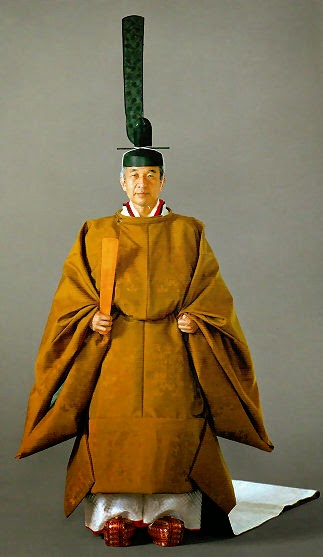
This year marks the Silver Jubilee (as it would be called in the west anyway) of HM the Emperor of Japan who had his formal enthronement ceremony twenty-four years ago today. It was truly an historic event, coming after the 63-year reign of his father, the Showa Emperor, which was the longest reign in Japanese imperial history. Although born in the time of the Empire of Japan, the current Emperor was still only about 12-years old when Japan surrendered in 1945. He did most of his ‘growing up’ during the days of the American occupation and the post-war State of Japan. As such, things were quite different for him compared to past Japanese emperors and on his shoulders rested an immense responsibility. He would be the first monarch to reign after the war, after the empire and under the new constitution and the new place Japan found itself in on the world stage. Fortunately, he had the advantage of a long-reigning father who presided over the most dramatic changes and so the Emperor was able to be brought up in this new atmosphere and fully prepared for his position and what would be required of him by the time he came to the throne in 1989. Since then, he has proven himself to be one of the great monarchial leaders of the world and an example to his own people and to others worthy of emulation.
The past 25 years of the current imperial era have seen high points and low points for Japan but through it all, the Emperor has been exactly the monarch that the situation, and the times, needed him to be. He came to the throne at a time when Japan was undergoing astounding economic success. The country had risen from the ashes of war to become the second largest economy on earth and, for a time, it even looked as though Japan might surpass the economic powerhouse of the United States as the value of the currency rose and investment poured in. However, over-confidence, reckless spending and bad decisions by banks, businesses and the government soon caused the bubble to burst and Japan experienced the infamous “Lost Decade”, which was actually more than a decade, of economic stagnation. Over the many years of difficulties, the Emperor was a symbol of reassurance to the public as well as an example of frugality and simplicity. The Japanese monarchs have long been known for living elegantly but simply and the current Emperor has been no exception. He always set an example of being majestic and dignified without being ostentatious. The public, after the economic bubble burst, took this to heart and began to follow his example; extravagance was no longer fashionable.
On the political front, the long rule of the Liberal Democratic Party (the most conservative mainstream party) came to an end in 1993 but the coalition that replaced it soon collapsed and the LDP made its way back into politics in a bizarre coalition of its own that gave Japan its first socialist prime minister in half a century. Although most remembered today for his high profile apology to the other nations of Asia for the Japanese role in World War II, the election of a socialist prime minister was just the first in a string of disasters Japan had to deal with. His massive amounts of new regulations and entitlements did the economy no good, in 1995 a major earthquake struck Kobe and two months later a cult group carried out a poison gas attack on a Tokyo subway that killed 13 people and injured many, many more. The Emperor responded to such events with a dutiful adherence to his constitutional role and by acting in a kind and compassionate way to give comfort to his people in times of natural disasters. Both of these duties the Emperor would be called on to perform throughout his 25-years on the throne. In terms of politics, the Emperor has remained above the turmoil, never drifting to one side or the other but always on the side of Japan as a whole.
Although the Emperor is not a political figure in that he is not involved in politics or policy making, he is a leader and is undoubtedly the greatest leader Japan has and not simply by virtue of being the Emperor. He has shown more wisdom, moderation and foresight than virtually any political or social leader in Japan in his lifetime. In terms of domestic politics, the Emperor has always been scrupulous about following the rules and sticking to the constitution. This has made him an invaluable source of stability in very politically unstable times. Even when Japan was undergoing rapid turnovers of governments, one after another, there was no collapse in confidence domestically or in foreign countries. Anywhere else where governments came and went so quickly this would cause a panic but not in Japan and that is because, simply by being there, the Emperor has a calming effect. The politicians in Tokyo may bicker and feud but everyone feels that it will all be okay because the Emperor is still in his palace and all is right with the world. The Emperor, going about his duties, closing one Diet session and opening another, is a sign of survival. The Emperor is still there, just as he always has been, so Japan is still here, the country will not cease to exist because politicians cannot come to an agreement.
On the world stage, the Emperor has been, perhaps even more important over these last 25 years. His reign has seen the start of Japan reemerging as a force in world affairs and as a major military power (even if it is not, legally, a formal military). Japan deployed forces (in a non-combatant capacity) abroad for the first time since World War II, showing an increasing willingness to put the past behind them and become more self-sufficient in defense matters. Of course, this has not always been welcomed by those in other countries and bigoted elements at home and abroad (though they despise each other) have both sought to cling to memories of the war and keep Japan shackled to the past, a focus of hostile and suspicious feelings. However, so far, they have been unsuccessful thanks in no small part to the actions of the Emperor himself. In contrast to the narrow-minded chauvinism of the radicals, the Emperor has traveled the world, solidifying relations with allies, renewing old friendships and forming new and better relations with foreign countries as the embodiment of a confident, peace-loving, mature Japan. He has struck just the right note on every occasion, expressing regret for past events but honoring past heroism and sacrifice, acknowledging history but not being enslaved by it. Rather than carry on old grudges, the Emperor has set his focus on strengthening the Japan of today and tomorrow by goodwill and strong friendships in the international community. And, where Japan has been met by bigotry, the Emperor has taken the moral high ground, meeting such animosity with polite kindness, an open mind and an outstretched hand. Such warmth and dignity on his part has served more than once to highlight the immaturity of those powers which cling to bitterness.
While serving as an inspiring example at home and putting the best image of Japan forward around the world, the Emperor has also been a great comfort to his people in times of crisis. At no time was this more evident than in the worst disaster Japan has suffered since the end of the war; the earthquake and tsunami of 2011. The Emperor took the almost unprecedented step of addressing the entire nation personally in a televised message, the nearest thing to which that was ever done before being the address by radio to the people by HM the Showa Emperor in 1945. The Emperor and Empress also made numerous visits to the victims of the disaster, greeting them personally, talking to them, listening to them and comforting them. No one who experienced such a visit or even witnessed one could not have failed to be moved by the genuine sympathy and compassion the Emperor showed to every one of his unfortunate subjects at such a sad and difficult time. Once again, he set the perfect example and the people of Japan came together in a most heart-warming way to help each other, care for each other and to join in resilient determination to rebuild, recover and improve the afflicted area. With the moral leadership that the Emperor provided, everyone could see that the old values many had thought had disappeared in Japan, were still alive and could come back into focus in times of crisis for the country.
Throughout his reign, the Emperor has seen a number of natural disasters afflict his country. There has also been an increase in tension with Japan’s closest neighbors with harsh words and military scares from China, Korea and Russia. This, naturally, has led to Japan placing more emphasis on national defense and this, in turn, has provoked protests from Korea, China and Russia with China and Russia in particular clinging to the memory of World War II and wishing to, in their words, “preserve the post-World War II world order” which of course would include a powerless Japan. However, so far, their efforts to frighten other countries and divide Japan and her closest allies have proven mostly fruitless, thanks in no small part to the Emperor himself. He has always made it clear that he values nothing higher than peace, remembering the horrors and ruination of the war very well himself, and he has always been ready to reach out in friendship to any country. His actions have shown the rest of the world that any tensions, such as between China and Japan, are not being instigated by Japan but by China. The Emperor has also been of immense benefit in strengthening existing friendships with American and European powers as well as forging new and better relations with other Asian countries such as India.
The Emperor cannot keep the peace on his own, but he has set the right example, the right moral tone and been the best sort of ambassador Japan could ever have. He has spread trust and goodwill wherever he has gone and won over people in every country he has visited with his kind smile and genuine warmth. The last 25-years have, in many ways, been difficult for Japan. The country has troublesome neighbors, more national debt than any country in the world, faces a looming demographic crisis and has had to deal with many natural disasters. However, the people have also been coming together like never before, becoming more realistic and more involved in the world community and have shown the talent and creativity to overcome great problems. And through it all they have had the Emperor’s prayers to support them, the Emperor to set a matchless example for them, an Emperor to be their best public face to the world, an Emperor who has comforted them in times of crisis, congratulated them on great achievements and reminded all Japanese people everywhere of their shared history and illustrious national story. In brief, the Emperor has been, in every way, the model monarch and a matchless moral leader for his country and all his people. Congratulations on 25-years on the throne and may the Emperor reign on, until the pebbles grow to might stones. 天皇陛下万歳! 万歳! 万歳!
The past 25 years of the current imperial era have seen high points and low points for Japan but through it all, the Emperor has been exactly the monarch that the situation, and the times, needed him to be. He came to the throne at a time when Japan was undergoing astounding economic success. The country had risen from the ashes of war to become the second largest economy on earth and, for a time, it even looked as though Japan might surpass the economic powerhouse of the United States as the value of the currency rose and investment poured in. However, over-confidence, reckless spending and bad decisions by banks, businesses and the government soon caused the bubble to burst and Japan experienced the infamous “Lost Decade”, which was actually more than a decade, of economic stagnation. Over the many years of difficulties, the Emperor was a symbol of reassurance to the public as well as an example of frugality and simplicity. The Japanese monarchs have long been known for living elegantly but simply and the current Emperor has been no exception. He always set an example of being majestic and dignified without being ostentatious. The public, after the economic bubble burst, took this to heart and began to follow his example; extravagance was no longer fashionable.
On the political front, the long rule of the Liberal Democratic Party (the most conservative mainstream party) came to an end in 1993 but the coalition that replaced it soon collapsed and the LDP made its way back into politics in a bizarre coalition of its own that gave Japan its first socialist prime minister in half a century. Although most remembered today for his high profile apology to the other nations of Asia for the Japanese role in World War II, the election of a socialist prime minister was just the first in a string of disasters Japan had to deal with. His massive amounts of new regulations and entitlements did the economy no good, in 1995 a major earthquake struck Kobe and two months later a cult group carried out a poison gas attack on a Tokyo subway that killed 13 people and injured many, many more. The Emperor responded to such events with a dutiful adherence to his constitutional role and by acting in a kind and compassionate way to give comfort to his people in times of natural disasters. Both of these duties the Emperor would be called on to perform throughout his 25-years on the throne. In terms of politics, the Emperor has remained above the turmoil, never drifting to one side or the other but always on the side of Japan as a whole.
Although the Emperor is not a political figure in that he is not involved in politics or policy making, he is a leader and is undoubtedly the greatest leader Japan has and not simply by virtue of being the Emperor. He has shown more wisdom, moderation and foresight than virtually any political or social leader in Japan in his lifetime. In terms of domestic politics, the Emperor has always been scrupulous about following the rules and sticking to the constitution. This has made him an invaluable source of stability in very politically unstable times. Even when Japan was undergoing rapid turnovers of governments, one after another, there was no collapse in confidence domestically or in foreign countries. Anywhere else where governments came and went so quickly this would cause a panic but not in Japan and that is because, simply by being there, the Emperor has a calming effect. The politicians in Tokyo may bicker and feud but everyone feels that it will all be okay because the Emperor is still in his palace and all is right with the world. The Emperor, going about his duties, closing one Diet session and opening another, is a sign of survival. The Emperor is still there, just as he always has been, so Japan is still here, the country will not cease to exist because politicians cannot come to an agreement.
On the world stage, the Emperor has been, perhaps even more important over these last 25 years. His reign has seen the start of Japan reemerging as a force in world affairs and as a major military power (even if it is not, legally, a formal military). Japan deployed forces (in a non-combatant capacity) abroad for the first time since World War II, showing an increasing willingness to put the past behind them and become more self-sufficient in defense matters. Of course, this has not always been welcomed by those in other countries and bigoted elements at home and abroad (though they despise each other) have both sought to cling to memories of the war and keep Japan shackled to the past, a focus of hostile and suspicious feelings. However, so far, they have been unsuccessful thanks in no small part to the actions of the Emperor himself. In contrast to the narrow-minded chauvinism of the radicals, the Emperor has traveled the world, solidifying relations with allies, renewing old friendships and forming new and better relations with foreign countries as the embodiment of a confident, peace-loving, mature Japan. He has struck just the right note on every occasion, expressing regret for past events but honoring past heroism and sacrifice, acknowledging history but not being enslaved by it. Rather than carry on old grudges, the Emperor has set his focus on strengthening the Japan of today and tomorrow by goodwill and strong friendships in the international community. And, where Japan has been met by bigotry, the Emperor has taken the moral high ground, meeting such animosity with polite kindness, an open mind and an outstretched hand. Such warmth and dignity on his part has served more than once to highlight the immaturity of those powers which cling to bitterness.
While serving as an inspiring example at home and putting the best image of Japan forward around the world, the Emperor has also been a great comfort to his people in times of crisis. At no time was this more evident than in the worst disaster Japan has suffered since the end of the war; the earthquake and tsunami of 2011. The Emperor took the almost unprecedented step of addressing the entire nation personally in a televised message, the nearest thing to which that was ever done before being the address by radio to the people by HM the Showa Emperor in 1945. The Emperor and Empress also made numerous visits to the victims of the disaster, greeting them personally, talking to them, listening to them and comforting them. No one who experienced such a visit or even witnessed one could not have failed to be moved by the genuine sympathy and compassion the Emperor showed to every one of his unfortunate subjects at such a sad and difficult time. Once again, he set the perfect example and the people of Japan came together in a most heart-warming way to help each other, care for each other and to join in resilient determination to rebuild, recover and improve the afflicted area. With the moral leadership that the Emperor provided, everyone could see that the old values many had thought had disappeared in Japan, were still alive and could come back into focus in times of crisis for the country.
Throughout his reign, the Emperor has seen a number of natural disasters afflict his country. There has also been an increase in tension with Japan’s closest neighbors with harsh words and military scares from China, Korea and Russia. This, naturally, has led to Japan placing more emphasis on national defense and this, in turn, has provoked protests from Korea, China and Russia with China and Russia in particular clinging to the memory of World War II and wishing to, in their words, “preserve the post-World War II world order” which of course would include a powerless Japan. However, so far, their efforts to frighten other countries and divide Japan and her closest allies have proven mostly fruitless, thanks in no small part to the Emperor himself. He has always made it clear that he values nothing higher than peace, remembering the horrors and ruination of the war very well himself, and he has always been ready to reach out in friendship to any country. His actions have shown the rest of the world that any tensions, such as between China and Japan, are not being instigated by Japan but by China. The Emperor has also been of immense benefit in strengthening existing friendships with American and European powers as well as forging new and better relations with other Asian countries such as India.
The Emperor cannot keep the peace on his own, but he has set the right example, the right moral tone and been the best sort of ambassador Japan could ever have. He has spread trust and goodwill wherever he has gone and won over people in every country he has visited with his kind smile and genuine warmth. The last 25-years have, in many ways, been difficult for Japan. The country has troublesome neighbors, more national debt than any country in the world, faces a looming demographic crisis and has had to deal with many natural disasters. However, the people have also been coming together like never before, becoming more realistic and more involved in the world community and have shown the talent and creativity to overcome great problems. And through it all they have had the Emperor’s prayers to support them, the Emperor to set a matchless example for them, an Emperor to be their best public face to the world, an Emperor who has comforted them in times of crisis, congratulated them on great achievements and reminded all Japanese people everywhere of their shared history and illustrious national story. In brief, the Emperor has been, in every way, the model monarch and a matchless moral leader for his country and all his people. Congratulations on 25-years on the throne and may the Emperor reign on, until the pebbles grow to might stones. 天皇陛下万歳! 万歳! 万歳!
Sunday, November 9, 2014
Today in History
On this day in 1867 the last Tokugawa Shogun formally handed power over to the Emperor, marking the start of the Meiji Restoration.
Subscribe to:
Posts (Atom)